


Free 14-Day Trial
Perform unlimited ergonomic assessments for two weeks. All you need is your phone.

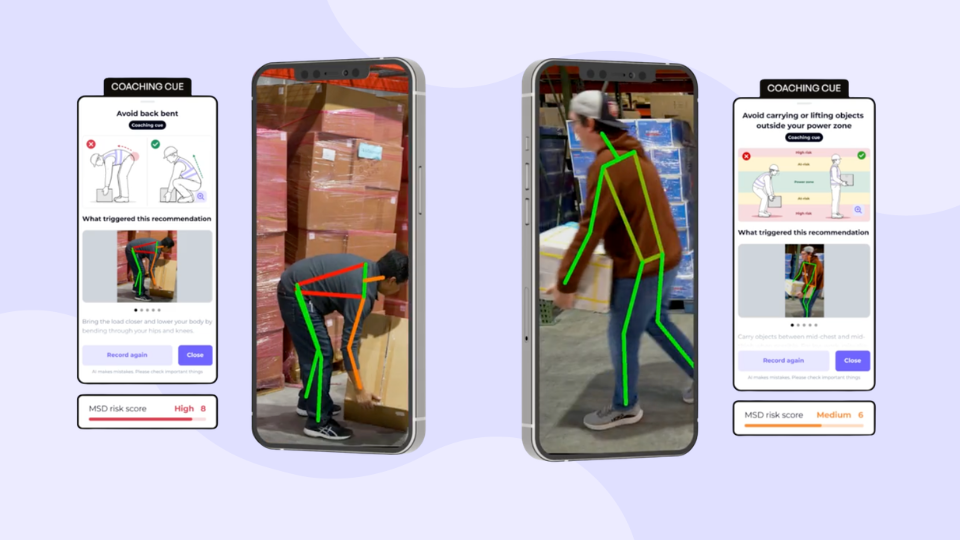
Most safety teams can spot a worker reaching, twisting, bending, or shifting into an awkward position. The harder question is whether that movement is the problem or a sign of something in the task that deserves a closer look.
A reach may get longer as a parts bin empties. A worker may twist because the conveyor and carton are misaligned. An unstable stance may be the only way to work around an obstruction. Those conditions matter because NIOSH notes that WMSD risk depends on factors such as force, repetition, posture, intensity, frequency, and duration.
That makes movement cues useful as a starting point. The seven patterns below can help safety teams recognize where physical demand may be building, investigate what in the task is driving the movement, and decide whether the right response is coaching, deeper assessment, or a change to the work.
The same movement can mean very different things from one task to another. A brief twist while handling something light is not the same as rotating with a load hundreds of times during a shift. A reach may come from worker technique, or it may be the only way to access material in a deep container.
The key is knowing what to ask when these movements appear. The sections below look at seven common patterns and the questions safety teams should use to understand what each one may reveal about the task.
As the hands move farther from the body, the load creates more leverage on the lower back, increasing the muscular force needed to control it. That is why horizontal reach distance is a specific factor in the Revised NIOSH Lifting Equation.
Look at what creates the distance. A deep bin, wide conveyor, changing pallet position, guarding, or equipment location may be driving the reach. TuMeke’s overview of reach distance and other NIOSH lifting variables explains how those conditions affect lifting analysis.
As a worker reaches lower, the trunk often has to flex farther to keep the hands on the load. That can become more demanding when the movement is repeated, combined with a long reach, or performed while handling weight.
Watch how the task changes through the cycle. A pallet may start near waist height and end near the floor, or parts may become harder to reach as a container empties.
When the same bending keeps appearing, look at what is creating it, such as pallet height, container depth, material position, or a work surface that is too low.
Twisting becomes more demanding when the worker has to move or control a load while the upper body rotates away from the feet. The concern grows when that rotation is repeated, combined with force, or built into every transfer.
Watch the relationship between the worker, the load, and the destination. A packer may pull product from a conveyor on one side and place it into cartons beside or behind them, creating the same rotation cycle after cycle.
Before coaching the worker to turn with their feet, check whether the layout actually allows it. If the workstation keeps the pickup and drop-off points misaligned, the transfer path may need to change.
Side bending often appears when the work is positioned to one side of the worker or when something prevents a direct approach. That shifts the trunk away from a more centered working position and may become more demanding when it is repeated or combined with reaching and force.
Look at where the movement starts. Guarding, piping, deep containers, tool placement, or restricted access may force the worker to lean sideways to see, reach, or handle the work.
If the same side bend keeps appearing, ask what prevents the worker from getting square to the task. Repositioning the work, tool, material, or access point may address the movement more effectively than coaching alone.
One-arm handling changes how the worker supports and controls the load because the effort is no longer shared evenly between both sides of the body. How much that matters depends on the load, reach, frequency, and why the second hand is unavailable.
In many jobs, one-handed handling is not simply a technique choice. The other hand may be needed to:
Before telling the worker to use both hands, determine whether the task actually makes two-handed handling possible. If the process requires one hand for another function, the better question may be whether the setup or sequence can change.
The farther work moves above, below, or away from the body, the harder it can become to keep the load close and maintain a more favorable handling position.
OSHA describes the lifting power zone as the area close to the body, roughly between mid-thigh and mid-chest. Keeping material in that range where practical can reduce the need for high, low, or extended handling.
The challenge is that the work may not stay in the same place throughout the task. A pallet gets lower as product is removed, higher as it is stacked, and a deep container becomes harder to access as material levels drop.
When workers repeatedly move outside the power zone, look at what is changing or fixed in the task:
The goal is not to keep every movement inside one ideal zone. It is to identify whether the job repeatedly forces workers into harder-to-manage positions that could be improved through layout or material-handling changes.
A stable base gives the worker a better platform for controlling the body and the load. When footing is restricted or uneven, the worker may have to shift, brace, lean, or compensate just to complete the task.
Look at what is interfering with normal foot placement. Obstructions, limited access, uneven surfaces, equipment location, or the need to reach around part of the process may all force an uneven stance.
If the same instability appears throughout the task, ask whether the worker can realistically reposition without losing access to the work. If not, the issue may be the workspace itself, not simply the worker’s stance.
Some patterns may also warrant a deeper ergonomic assessment before the team chooses a control. Using the assessment method that fits the task can turn a visible cue into a more complete picture of the exposure.
Spotting a reach, bend, twist, or unstable stance is only useful if the team can understand what is driving it and decide what to do next.
TuMeke helps safety teams move from observation to action by making it easier to:
Choose one task where the same movement keeps showing up and see how TuMeke can help your team identify the pattern, understand the exposure, and decide what needs to change.
Not necessarily. A reach, bend, twist, or uneven stance should prompt a closer look, but the movement alone does not determine the level of risk. Consider the force involved, how often and how long the movement occurs, load position, grip, work pace, and other task conditions.
Consider a deeper assessment when the movement occurs frequently, involves meaningful force, continues for long periods, appears across several workers, or combines with other risk factors. A recurring pattern can also warrant further evaluation when the cause is not obvious from observation alone.
When possible, yes. NIOSH recommends observing several workers performing the same task because people may use different postures and techniques. Comparing workers can help determine whether a movement reflects individual technique or a condition built into the job.
Yes. The physical demands of a task can change as material levels drop, pallets rise or fall, loads change, or workers move through different parts of the cycle. Reviewing only one convenient moment may miss the conditions that create the greatest exposure.
%201.svg)


.jpg)

.jpg)
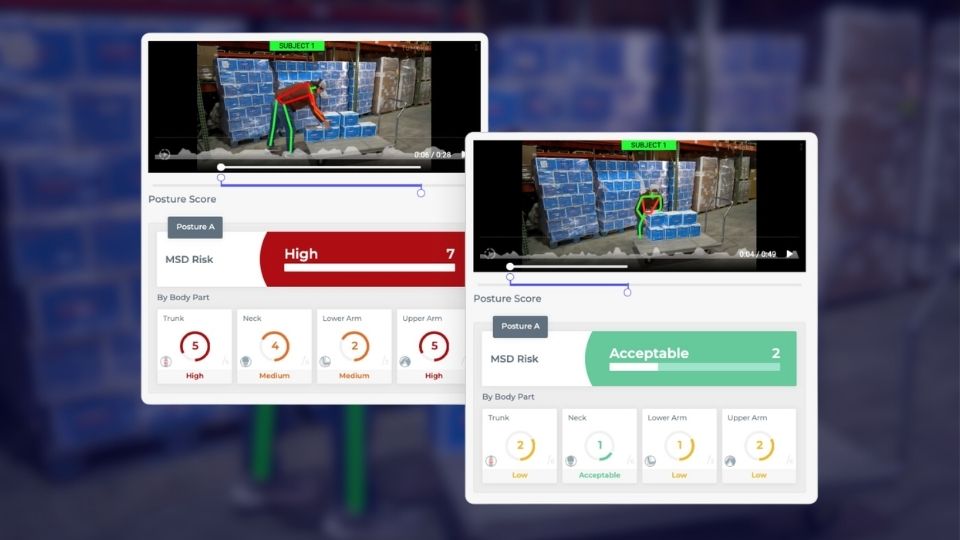

Most safety teams can spot a worker reaching, twisting, bending, or shifting into an awkward position. The harder question is whether that movement is the problem or a sign of something in the task that deserves a closer look.
A reach may get longer as a parts bin empties. A worker may twist because the conveyor and carton are misaligned. An unstable stance may be the only way to work around an obstruction. Those conditions matter because NIOSH notes that WMSD risk depends on factors such as force, repetition, posture, intensity, frequency, and duration.
That makes movement cues useful as a starting point. The seven patterns below can help safety teams recognize where physical demand may be building, investigate what in the task is driving the movement, and decide whether the right response is coaching, deeper assessment, or a change to the work.
The same movement can mean very different things from one task to another. A brief twist while handling something light is not the same as rotating with a load hundreds of times during a shift. A reach may come from worker technique, or it may be the only way to access material in a deep container.
The key is knowing what to ask when these movements appear. The sections below look at seven common patterns and the questions safety teams should use to understand what each one may reveal about the task.
As the hands move farther from the body, the load creates more leverage on the lower back, increasing the muscular force needed to control it. That is why horizontal reach distance is a specific factor in the Revised NIOSH Lifting Equation.
Look at what creates the distance. A deep bin, wide conveyor, changing pallet position, guarding, or equipment location may be driving the reach. TuMeke’s overview of reach distance and other NIOSH lifting variables explains how those conditions affect lifting analysis.
As a worker reaches lower, the trunk often has to flex farther to keep the hands on the load. That can become more demanding when the movement is repeated, combined with a long reach, or performed while handling weight.
Watch how the task changes through the cycle. A pallet may start near waist height and end near the floor, or parts may become harder to reach as a container empties.
When the same bending keeps appearing, look at what is creating it, such as pallet height, container depth, material position, or a work surface that is too low.
Twisting becomes more demanding when the worker has to move or control a load while the upper body rotates away from the feet. The concern grows when that rotation is repeated, combined with force, or built into every transfer.
Watch the relationship between the worker, the load, and the destination. A packer may pull product from a conveyor on one side and place it into cartons beside or behind them, creating the same rotation cycle after cycle.
Before coaching the worker to turn with their feet, check whether the layout actually allows it. If the workstation keeps the pickup and drop-off points misaligned, the transfer path may need to change.
Side bending often appears when the work is positioned to one side of the worker or when something prevents a direct approach. That shifts the trunk away from a more centered working position and may become more demanding when it is repeated or combined with reaching and force.
Look at where the movement starts. Guarding, piping, deep containers, tool placement, or restricted access may force the worker to lean sideways to see, reach, or handle the work.
If the same side bend keeps appearing, ask what prevents the worker from getting square to the task. Repositioning the work, tool, material, or access point may address the movement more effectively than coaching alone.
One-arm handling changes how the worker supports and controls the load because the effort is no longer shared evenly between both sides of the body. How much that matters depends on the load, reach, frequency, and why the second hand is unavailable.
In many jobs, one-handed handling is not simply a technique choice. The other hand may be needed to:
Before telling the worker to use both hands, determine whether the task actually makes two-handed handling possible. If the process requires one hand for another function, the better question may be whether the setup or sequence can change.
The farther work moves above, below, or away from the body, the harder it can become to keep the load close and maintain a more favorable handling position.
OSHA describes the lifting power zone as the area close to the body, roughly between mid-thigh and mid-chest. Keeping material in that range where practical can reduce the need for high, low, or extended handling.
The challenge is that the work may not stay in the same place throughout the task. A pallet gets lower as product is removed, higher as it is stacked, and a deep container becomes harder to access as material levels drop.
When workers repeatedly move outside the power zone, look at what is changing or fixed in the task:
The goal is not to keep every movement inside one ideal zone. It is to identify whether the job repeatedly forces workers into harder-to-manage positions that could be improved through layout or material-handling changes.
A stable base gives the worker a better platform for controlling the body and the load. When footing is restricted or uneven, the worker may have to shift, brace, lean, or compensate just to complete the task.
Look at what is interfering with normal foot placement. Obstructions, limited access, uneven surfaces, equipment location, or the need to reach around part of the process may all force an uneven stance.
If the same instability appears throughout the task, ask whether the worker can realistically reposition without losing access to the work. If not, the issue may be the workspace itself, not simply the worker’s stance.
Some patterns may also warrant a deeper ergonomic assessment before the team chooses a control. Using the assessment method that fits the task can turn a visible cue into a more complete picture of the exposure.
Spotting a reach, bend, twist, or unstable stance is only useful if the team can understand what is driving it and decide what to do next.
TuMeke helps safety teams move from observation to action by making it easier to:
Choose one task where the same movement keeps showing up and see how TuMeke can help your team identify the pattern, understand the exposure, and decide what needs to change.
Not necessarily. A reach, bend, twist, or uneven stance should prompt a closer look, but the movement alone does not determine the level of risk. Consider the force involved, how often and how long the movement occurs, load position, grip, work pace, and other task conditions.
Consider a deeper assessment when the movement occurs frequently, involves meaningful force, continues for long periods, appears across several workers, or combines with other risk factors. A recurring pattern can also warrant further evaluation when the cause is not obvious from observation alone.
When possible, yes. NIOSH recommends observing several workers performing the same task because people may use different postures and techniques. Comparing workers can help determine whether a movement reflects individual technique or a condition built into the job.
Yes. The physical demands of a task can change as material levels drop, pallets rise or fall, loads change, or workers move through different parts of the cycle. Reviewing only one convenient moment may miss the conditions that create the greatest exposure.