


Free 14-Day Trial
Perform unlimited ergonomic assessments for two weeks. All you need is your phone.

.jpg)
Ergonomic risk can get buried in plain sight. A Job Hazard Analysis (JHA) may correctly flag awkward posture, repetitive motion, or lifting, yet still leave the team with no clear idea what should change.
The JHA did its job by identifying the concern, but did it give the team enough information to act? This article explains when a deeper ergonomic assessment is warranted and what that assessment should help safety and operations figure out.
Putting “lifting,” “repetitive motion,” or “awkward posture” in a JHA is not the problem. Those are legitimate ergonomic concerns. OSHA’s Job Hazard Analysis guidance includes ergonomic hazards such as reaching, twisting, and lifting, and NIOSH identifies JHAs and JSAs as useful ways to flag jobs that may involve ergonomic risk.
The problem is what happens after the hazard gets identified.
Take two jobs that both involve manual lifting. One worker occasionally moves material from waist height. Another lifts repeatedly from near the floor while twisting to place the load. Both JHAs could say “manual lifting,” but that description does not tell you the same thing about both jobs.
The details of the task shape the exposure. NIOSH points to factors such as intensity, frequency, and duration, and notes that workers can be exposed to several physical risk factors at the same time.
A deeper assessment makes sense when the JHA identifies a concern but leaves the team unsure what to do next. The question is whether the JHA gives them enough information to make that decision.
The team may need a closer look if the JHA does not make it clear:
Take a worker who repeatedly reaches across a workstation. The movement is easy to spot, but the reason for it matters. If a high-use parts bin sits too far away, coaching the worker to keep materials closer will not change the layout that requires the reach every cycle.
The same problem comes up when the task changes over time. A palletizer may work comfortably around waist height, then reach lower or higher as the pallet fills. Looking at only one part of the cycle can miss the conditions creating the greatest concern.
Not every ergonomic hazard on a JHA needs a separate formal assessment. If the problem and the appropriate control are already clear, the team may have enough information to act.
A deeper assessment should help the team understand what is happening during the task, not just give the hazard a more specific label.
NIOSH recommends breaking the job into tasks and actions, then looking at the underlying causes of the risk factors. That includes understanding how often the exposure occurs, how long it lasts, and how the demands change during the work.
For an awkward posture, that may mean identifying when the posture occurs and what in the task is causing it. For repetitive lifting, it may mean finding the part of the work cycle that creates the greatest demand.
The assessment method matters because different tools answer different questions. The Revised NIOSH Lifting Equation, for example, is designed for two-handed manual lifting tasks. Other methods evaluate different types of ergonomic exposure.
The goal is to choose a method that fits the work and gives the team useful information about the exposure. TuMeke’s guide to choosing an ergonomic assessment method provides an overview of several common approaches.
The assessment also needs to reflect the task as employees actually perform it. A single observation or video may not capture how the work changes across the full cycle.
The assessment should give the team a clearer basis for choosing a control. Once it shows what is contributing to the exposure, safety and operations can focus on the part of the work that actually needs to change.
The proposed fix still has to hold up under normal working conditions. A workstation modification, equipment change, or process adjustment may reduce one exposure but create another problem or prove difficult to sustain at production pace. The team needs to evaluate the change in the context of how the job is actually performed.
After the change, reassess the task under comparable conditions. That closes the gap between completing a corrective action and knowing whether the exposure actually improved.
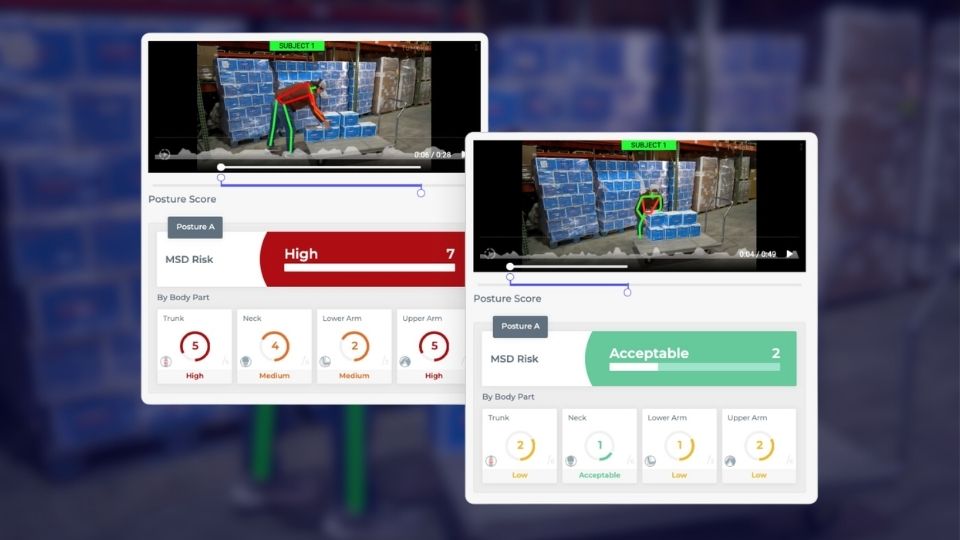
Doing this consistently gets harder when a safety team is responsible for many jobs or locations. TuMeke Risk Suite automates video-based ergonomic assessments and looks beyond posture at factors such as repetition, duration, job context, grip, force, and balance.
Teams can capture a task with a phone or upload existing video, review the findings, prioritize potential changes, and monitor the impact of interventions over time.
If your JHAs are surfacing ergonomic concerns that need a closer look, request a TuMeke demo to see how Risk Suite can help your team evaluate the work and follow the task through after changes are made.
No. Federal OSHA does not require a separate formal ergonomic assessment every time a JHA identifies an ergonomic concern. OSHA can address recognized serious ergonomic hazards under the General Duty Clause, but whether additional analysis is needed depends on the hazard and the conditions at the specific worksite.
A Job Hazard Analysis (JHA) is a broad, step-by-step review of an entire job task to identify all potential safety risks, while an Ergonomic Assessment is a specialized evaluation focused specifically on how a worker fits their workstation and tools to prevent musculoskeletal strain
Include people who understand how the job is actually performed. NIOSH recommends involving workers and supervisors familiar with the task. Safety or ergonomics personnel can guide the assessment, while operations can provide important context about production demands, task variability, and whether proposed changes will work in practice.
Yes. Video can help capture postures and movements for later review, and NIOSH recognizes video-based observation as an ergonomic assessment approach. The recording still needs to represent the task accurately. Important conditions such as load, frequency, duration, and changes across the work cycle may also need to be documented.
Reassess after making a meaningful ergonomic change so you can determine whether the intervention reduced the intended exposure. A new assessment may also be appropriate when the job, workstation, equipment, production process, or work practices change, or when new ergonomic concerns appear. NIOSH recommends following up on interventions to confirm they are working.
Match the method to the task and the exposure you need to evaluate. The Revised NIOSH Lifting Equation addresses certain two-handed lifting tasks, while methods such as REBA and RULA evaluate different types of postural exposure. No single method is appropriate for every ergonomic problem.
%201.svg)


Ergonomic risk can get buried in plain sight. A Job Hazard Analysis (JHA) may correctly flag awkward posture, repetitive motion, or lifting, yet still leave the team with no clear idea what should change.
The JHA did its job by identifying the concern, but did it give the team enough information to act? This article explains when a deeper ergonomic assessment is warranted and what that assessment should help safety and operations figure out.
Putting “lifting,” “repetitive motion,” or “awkward posture” in a JHA is not the problem. Those are legitimate ergonomic concerns. OSHA’s Job Hazard Analysis guidance includes ergonomic hazards such as reaching, twisting, and lifting, and NIOSH identifies JHAs and JSAs as useful ways to flag jobs that may involve ergonomic risk.
The problem is what happens after the hazard gets identified.
Take two jobs that both involve manual lifting. One worker occasionally moves material from waist height. Another lifts repeatedly from near the floor while twisting to place the load. Both JHAs could say “manual lifting,” but that description does not tell you the same thing about both jobs.
The details of the task shape the exposure. NIOSH points to factors such as intensity, frequency, and duration, and notes that workers can be exposed to several physical risk factors at the same time.
A deeper assessment makes sense when the JHA identifies a concern but leaves the team unsure what to do next. The question is whether the JHA gives them enough information to make that decision.
The team may need a closer look if the JHA does not make it clear:
Take a worker who repeatedly reaches across a workstation. The movement is easy to spot, but the reason for it matters. If a high-use parts bin sits too far away, coaching the worker to keep materials closer will not change the layout that requires the reach every cycle.
The same problem comes up when the task changes over time. A palletizer may work comfortably around waist height, then reach lower or higher as the pallet fills. Looking at only one part of the cycle can miss the conditions creating the greatest concern.
Not every ergonomic hazard on a JHA needs a separate formal assessment. If the problem and the appropriate control are already clear, the team may have enough information to act.
A deeper assessment should help the team understand what is happening during the task, not just give the hazard a more specific label.
NIOSH recommends breaking the job into tasks and actions, then looking at the underlying causes of the risk factors. That includes understanding how often the exposure occurs, how long it lasts, and how the demands change during the work.
For an awkward posture, that may mean identifying when the posture occurs and what in the task is causing it. For repetitive lifting, it may mean finding the part of the work cycle that creates the greatest demand.
The assessment method matters because different tools answer different questions. The Revised NIOSH Lifting Equation, for example, is designed for two-handed manual lifting tasks. Other methods evaluate different types of ergonomic exposure.
The goal is to choose a method that fits the work and gives the team useful information about the exposure. TuMeke’s guide to choosing an ergonomic assessment method provides an overview of several common approaches.
The assessment also needs to reflect the task as employees actually perform it. A single observation or video may not capture how the work changes across the full cycle.
The assessment should give the team a clearer basis for choosing a control. Once it shows what is contributing to the exposure, safety and operations can focus on the part of the work that actually needs to change.
The proposed fix still has to hold up under normal working conditions. A workstation modification, equipment change, or process adjustment may reduce one exposure but create another problem or prove difficult to sustain at production pace. The team needs to evaluate the change in the context of how the job is actually performed.
After the change, reassess the task under comparable conditions. That closes the gap between completing a corrective action and knowing whether the exposure actually improved.
Doing this consistently gets harder when a safety team is responsible for many jobs or locations. TuMeke Risk Suite automates video-based ergonomic assessments and looks beyond posture at factors such as repetition, duration, job context, grip, force, and balance.
Teams can capture a task with a phone or upload existing video, review the findings, prioritize potential changes, and monitor the impact of interventions over time.
If your JHAs are surfacing ergonomic concerns that need a closer look, request a TuMeke demo to see how Risk Suite can help your team evaluate the work and follow the task through after changes are made.
No. Federal OSHA does not require a separate formal ergonomic assessment every time a JHA identifies an ergonomic concern. OSHA can address recognized serious ergonomic hazards under the General Duty Clause, but whether additional analysis is needed depends on the hazard and the conditions at the specific worksite.
A Job Hazard Analysis (JHA) is a broad, step-by-step review of an entire job task to identify all potential safety risks, while an Ergonomic Assessment is a specialized evaluation focused specifically on how a worker fits their workstation and tools to prevent musculoskeletal strain
Include people who understand how the job is actually performed. NIOSH recommends involving workers and supervisors familiar with the task. Safety or ergonomics personnel can guide the assessment, while operations can provide important context about production demands, task variability, and whether proposed changes will work in practice.
Yes. Video can help capture postures and movements for later review, and NIOSH recognizes video-based observation as an ergonomic assessment approach. The recording still needs to represent the task accurately. Important conditions such as load, frequency, duration, and changes across the work cycle may also need to be documented.
Reassess after making a meaningful ergonomic change so you can determine whether the intervention reduced the intended exposure. A new assessment may also be appropriate when the job, workstation, equipment, production process, or work practices change, or when new ergonomic concerns appear. NIOSH recommends following up on interventions to confirm they are working.
Match the method to the task and the exposure you need to evaluate. The Revised NIOSH Lifting Equation addresses certain two-handed lifting tasks, while methods such as REBA and RULA evaluate different types of postural exposure. No single method is appropriate for every ergonomic problem.
.jpg)
.jpg)