


Prueba gratuita de 14 días
Realice evaluaciones ergonómicas ilimitadas durante dos semanas. Todo lo que necesitas es tu teléfono.

.png)
Ideas clave
La IA convierte los videos simples en puntajes de riesgo ergonómicos claros sobre los que los equipos pueden actuar de inmediato. Le ayuda a concentrarse en los problemas más importantes y elegir soluciones más fuertes. Las reevaluaciones rápidas muestran si esas correcciones realmente funcionaron. Con el tiempo, esto mueve su programa de reparaciones reactivas a una mejora constante y medible.
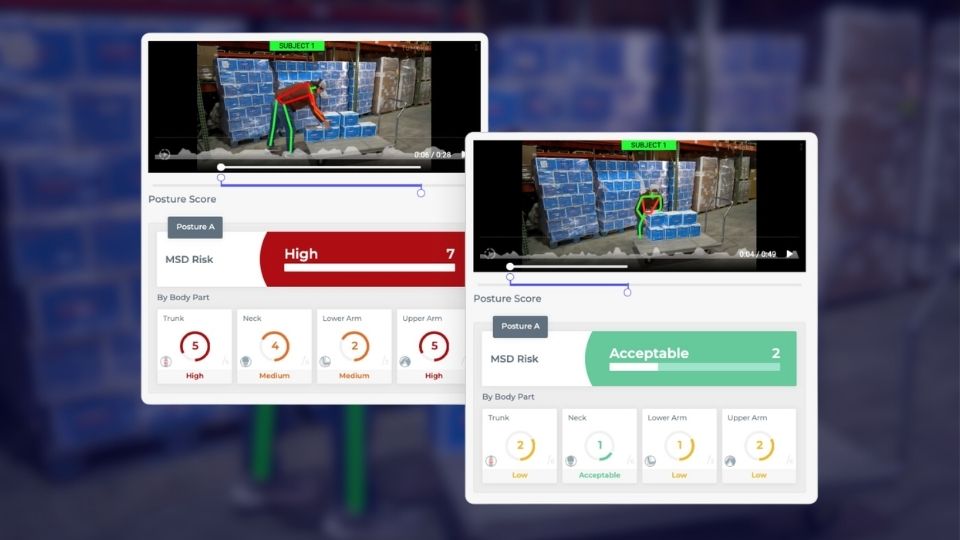
La IA acelera y simplifica la forma en que se capturan, califican y resuelven los riesgos ergonómicos. Las evaluaciones tradicionales a menudo se basan en observadores expertos y notas escritas a mano, que son lentas, inconsistentes y difíciles de escalar. La IA cambia eso mediante el uso de la visión computarizada y el rastreo de movimiento para analizar el trabajo del mundo real en tiempo real.
Así es como funciona el proceso:
Esto brinda a los gerentes de primera línea y a los líderes de seguridad respuestas inmediatas y respaldadas por datos, a menudo en minutos. También ayuda a estandarizar cómo se mide el riesgo ergonómico en ubicaciones, turnos o equipos. Al eliminar las conjeturas, la IA permite que los equipos actúen rápidamente, con confianza, antes de que los problemas pequeños se conviertan en lesiones graves.
Con los riesgos identificados y puntuados, el siguiente desafío es saber cuáles se deben abordar primero y por qué es importante priorizarlos.
No todos los riesgos ergonómicos necesitan el mismo nivel de respuesta. La OSHA aconseja a los empleadores que elijan controles de ingeniería “cuando sea posible” y señala que el equipo de protección personal (EPP) tiene un valor limitado para los riesgos ergonómicos. NIOSH refuerza esto con su jerarquía de controles, clasificando las correcciones de más fuerte (eliminación) a más débil (PPE).
La priorización efectiva se ve así:
La IA agrega velocidad y claridad a este proceso. Destaca dónde se concentra más el riesgo, muestra qué correcciones ofrecen el mayor retorno y ayuda a justificar las decisiones ante el liderazgo al empatar los puntajes al impacto esperado. Pero arreglar los riesgos no es suficiente. La verdadera prueba es si los cambios permanecen. Ahí es donde cerrar la brecha se vuelve crítico.
Cerra la brecha significa probar que una solución funcionó y mantener esa solución en su lugar. Muchas empresas documentan el riesgo pero nunca vuelven a revisar para confirmar si los cambios marcaron la diferencia. Eso deja brechas en el cumplimiento, la confianza y la prevención de lesiones.
Así es como se ve cerrar la brecha en la práctica:
Aquí es donde estándares como ISO 45001 y ANSI/ASSP Z10 importan. Ambos se basan en el ciclo Plan-Hacer-Revisar-Actuar, que enfatiza la revisión en repetidas ocasiones. Las herramientas de IA pueden apoyar este modelo al brindar a los equipos una forma rápida de volver a medir el riesgo y mantener los registros actualizados, sin agregar trabajo manual.
Cuando los equipos cierran la brecha de manera consistente, evitan que se repitan lesiones, muestran valor para el liderazgo y construyen credibilidad con los trabajadores. Para que esa brecha sea más fácil de cerrar y mantener las mejoras por buen camino, más equipos están recurriendo a herramientas como TuMeke.
TuMeke es una plataforma de seguridad en el lugar de trabajo construida con un propósito: ayudar a los equipos a tomar medidas reales sobre riesgos ergonómicos, rápidamente. Usando IA y visión computarizada, TuMeke convierte el video diario en puntajes de riesgo, recomendaciones específicas y resultados medibles. Sin dispositivos vestibles. Sin demoras. Sin conjeturas.
Así es como TuMeke ayuda a los equipos de seguridad y operaciones a pasar de la observación a la acción:
Ya sea que esté administrando un sitio o varios, TuMeke facilita la búsqueda temprana de problemas, solucionarlos más rápido y mostrar su progreso.
¿Listo para convertir los datos ergonómicos en un cambio real? Hagamos que su programa sea más rápido, más inteligente y más fácil de administrar. Programe una demostración con TuMeke hoy mismo.
¿Qué hace que las evaluaciones ergonómicas impulsadas por IA sean más confiables?
La IA reduce el error humano al aplicar métodos de puntuación consistentes como RULA o REBA en cada video. Realiza un seguimiento de los ángulos de postura y los patrones de movimiento de manera objetiva, ayudando a los equipos a comparar riesgos a lo largo del tiempo y entre sitios sin sesgos.
¿Qué tan rápido se pueden evaluar los cambios ergonómicos con IA?
Los sistemas de IA proporcionan puntajes de riesgo en minutos y facilitan la reevaluación de la misma tarea después de una solución. Esto ayuda a los equipos a ver rápidamente si la postura, el alcance o la tensión de levantamiento mejoraron, sin esperar nuevas lesiones o retrasos.
¿Qué tareas suelen tener una puntuación alta en riesgo ergonómico?
El alcance repetitivo, el levantamiento por encima del hombro, la torsión mientras se manejan cargas y la flexión sin soporte a menudo generan puntajes altos. Estos movimientos estresan las articulaciones y los músculos y pueden provocar lesiones registrables si no se corrigen.
¿Por qué es importante el seguimiento ergonómico de riesgos para el cumplimiento de normas?
Agencias como OSHA y Cal/OSHA recomiendan o requieren evaluaciones en el lugar de trabajo, control de peligros y seguimiento. Mantener puntajes de riesgo y registros de cambios ayuda a demostrar el cumplimiento de normas y respalda condiciones de trabajo más seguras a largo plazo.
¿Puede la IA ayudar a los equipos pequeños a ejecutar programas de ergonomía?
Sí. Las herramientas de IA como TuMeke eliminan la necesidad de expertos internos o configuraciones complejas. Los equipos pueden evaluar las tareas con un teléfono, aplicar los cambios recomendados y realizar un seguimiento de los resultados, todo sin wearables ni personal ergonómico dedicado.
%201.svg)


.jpg)

.jpg)

Ideas clave
La IA convierte los videos simples en puntajes de riesgo ergonómicos claros sobre los que los equipos pueden actuar de inmediato. Le ayuda a concentrarse en los problemas más importantes y elegir soluciones más fuertes. Las reevaluaciones rápidas muestran si esas correcciones realmente funcionaron. Con el tiempo, esto mueve su programa de reparaciones reactivas a una mejora constante y medible.
La IA acelera y simplifica la forma en que se capturan, califican y resuelven los riesgos ergonómicos. Las evaluaciones tradicionales a menudo se basan en observadores expertos y notas escritas a mano, que son lentas, inconsistentes y difíciles de escalar. La IA cambia eso mediante el uso de la visión computarizada y el rastreo de movimiento para analizar el trabajo del mundo real en tiempo real.
Así es como funciona el proceso:
Esto brinda a los gerentes de primera línea y a los líderes de seguridad respuestas inmediatas y respaldadas por datos, a menudo en minutos. También ayuda a estandarizar cómo se mide el riesgo ergonómico en ubicaciones, turnos o equipos. Al eliminar las conjeturas, la IA permite que los equipos actúen rápidamente, con confianza, antes de que los problemas pequeños se conviertan en lesiones graves.
Con los riesgos identificados y puntuados, el siguiente desafío es saber cuáles se deben abordar primero y por qué es importante priorizarlos.
No todos los riesgos ergonómicos necesitan el mismo nivel de respuesta. La OSHA aconseja a los empleadores que elijan controles de ingeniería “cuando sea posible” y señala que el equipo de protección personal (EPP) tiene un valor limitado para los riesgos ergonómicos. NIOSH refuerza esto con su jerarquía de controles, clasificando las correcciones de más fuerte (eliminación) a más débil (PPE).
La priorización efectiva se ve así:
La IA agrega velocidad y claridad a este proceso. Destaca dónde se concentra más el riesgo, muestra qué correcciones ofrecen el mayor retorno y ayuda a justificar las decisiones ante el liderazgo al empatar los puntajes al impacto esperado. Pero arreglar los riesgos no es suficiente. La verdadera prueba es si los cambios permanecen. Ahí es donde cerrar la brecha se vuelve crítico.
Cerra la brecha significa probar que una solución funcionó y mantener esa solución en su lugar. Muchas empresas documentan el riesgo pero nunca vuelven a revisar para confirmar si los cambios marcaron la diferencia. Eso deja brechas en el cumplimiento, la confianza y la prevención de lesiones.
Así es como se ve cerrar la brecha en la práctica:
Aquí es donde estándares como ISO 45001 y ANSI/ASSP Z10 importan. Ambos se basan en el ciclo Plan-Hacer-Revisar-Actuar, que enfatiza la revisión en repetidas ocasiones. Las herramientas de IA pueden apoyar este modelo al brindar a los equipos una forma rápida de volver a medir el riesgo y mantener los registros actualizados, sin agregar trabajo manual.
Cuando los equipos cierran la brecha de manera consistente, evitan que se repitan lesiones, muestran valor para el liderazgo y construyen credibilidad con los trabajadores. Para que esa brecha sea más fácil de cerrar y mantener las mejoras por buen camino, más equipos están recurriendo a herramientas como TuMeke.
TuMeke es una plataforma de seguridad en el lugar de trabajo construida con un propósito: ayudar a los equipos a tomar medidas reales sobre riesgos ergonómicos, rápidamente. Usando IA y visión computarizada, TuMeke convierte el video diario en puntajes de riesgo, recomendaciones específicas y resultados medibles. Sin dispositivos vestibles. Sin demoras. Sin conjeturas.
Así es como TuMeke ayuda a los equipos de seguridad y operaciones a pasar de la observación a la acción:
Ya sea que esté administrando un sitio o varios, TuMeke facilita la búsqueda temprana de problemas, solucionarlos más rápido y mostrar su progreso.
¿Listo para convertir los datos ergonómicos en un cambio real? Hagamos que su programa sea más rápido, más inteligente y más fácil de administrar. Programe una demostración con TuMeke hoy mismo.
¿Qué hace que las evaluaciones ergonómicas impulsadas por IA sean más confiables?
La IA reduce el error humano al aplicar métodos de puntuación consistentes como RULA o REBA en cada video. Realiza un seguimiento de los ángulos de postura y los patrones de movimiento de manera objetiva, ayudando a los equipos a comparar riesgos a lo largo del tiempo y entre sitios sin sesgos.
¿Qué tan rápido se pueden evaluar los cambios ergonómicos con IA?
Los sistemas de IA proporcionan puntajes de riesgo en minutos y facilitan la reevaluación de la misma tarea después de una solución. Esto ayuda a los equipos a ver rápidamente si la postura, el alcance o la tensión de levantamiento mejoraron, sin esperar nuevas lesiones o retrasos.
¿Qué tareas suelen tener una puntuación alta en riesgo ergonómico?
El alcance repetitivo, el levantamiento por encima del hombro, la torsión mientras se manejan cargas y la flexión sin soporte a menudo generan puntajes altos. Estos movimientos estresan las articulaciones y los músculos y pueden provocar lesiones registrables si no se corrigen.
¿Por qué es importante el seguimiento ergonómico de riesgos para el cumplimiento de normas?
Agencias como OSHA y Cal/OSHA recomiendan o requieren evaluaciones en el lugar de trabajo, control de peligros y seguimiento. Mantener puntajes de riesgo y registros de cambios ayuda a demostrar el cumplimiento de normas y respalda condiciones de trabajo más seguras a largo plazo.
¿Puede la IA ayudar a los equipos pequeños a ejecutar programas de ergonomía?
Sí. Las herramientas de IA como TuMeke eliminan la necesidad de expertos internos o configuraciones complejas. Los equipos pueden evaluar las tareas con un teléfono, aplicar los cambios recomendados y realizar un seguimiento de los resultados, todo sin wearables ni personal ergonómico dedicado.
.jpg)