


Free 14-Day Trial
Perform unlimited ergonomic assessments for two weeks. All you need is your phone.

.jpg)
When you have hundreds of jobs to review, the hardest part is deciding where to start. Some tasks clearly deserve attention, but others sit in a gray area where injury history, worker complaints, exposure, and the number of people doing the work all point in different directions.
The goal is to narrow the field before committing time to a full assessment. A broad screen helps identify which jobs need a closer look, which ones can wait, and where a deeper assessment is most likely to lead to meaningful action.
A broad screen should answer one question: Which jobs show enough signs of ergonomic risk to justify a closer assessment?
Start with information the organization already has. Injury and first-aid records can point to problem areas. Worker discomfort reports, supervisor concerns, and observations can identify issues that have not resulted in a recordable injury. OSHA recommends using both injury information and proactive methods such as observation, job analysis, workplace surveys, and worker interviews to identify ergonomic problems.
Then look at the exposure itself. NIOSH recommends screening jobs for ergonomic risk factors and points to intensity, frequency, and duration as factors that affect WMSD risk. Force, repetition, and awkward posture may also occur together within the same task.
Changes to the job matter too. Production may have increased since the last review. Materials or equipment may have changed. Workers may now perform the task for longer periods. Any of those changes can make an older assessment less representative of the work being performed today.
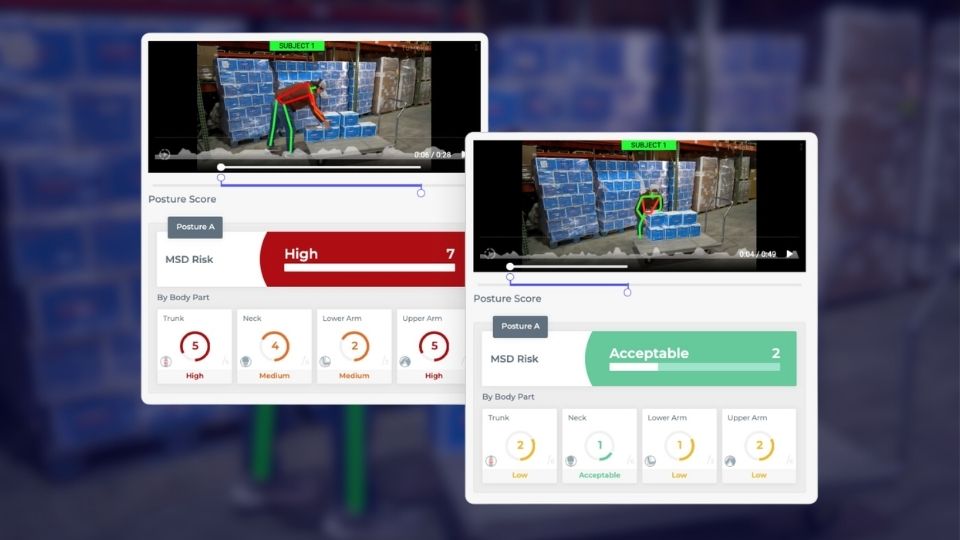
The screen does not need to produce a precise risk score for every job. It needs to narrow the workload into broad levels of attention:
That gives the team a manageable group of jobs to evaluate more closely instead of treating the entire backlog the same way.
After the broad screen, you'll have a smaller group of jobs that warrant closer attention. The next step is deciding which ones should receive a detailed assessment first.
Start with the task itself. Consider how intense the exposure is, how often it occurs, and how long it lasts. Multiple ergonomic risk factors occurring together can raise additional concern. Worker discomfort or previous injuries may also influence the priority.
Next, consider how many workers are exposed and how often the task is performed across the operation.
A specialty maintenance task may present substantial ergonomic risk but be performed by two employees several times per month. A packaging task may have somewhat lower task-level risk but be performed by 60 employees throughout every shift.
Both may warrant assessment, but they represent very different levels of workforce exposure.
OSHA's broader hazard identification and assessment guidance recommends considering the severity of potential outcomes, the likelihood of exposure or an incident, and the number of workers who could be exposed when prioritizing hazards for control. OSHA does not prescribe a universal ergonomics formula, but these factors can help put task-level risk in context.
Once a job moves to the front of the assessment queue, look beyond the job title.
An "order picker," for example, may work from floor level, reach overhead, handle cases of different weights, push equipment, and build pallets. Those activities can create different exposures even though they belong to the same job.
NIOSH's job-analysis guidance recommends breaking jobs into separate tasks and documenting the severity, frequency, and duration of identified risk factors. This helps the team identify where the risk is actually coming from instead of treating the entire job as one exposure.
The previous steps help decide which jobs need detailed assessment first. Once the assessment is complete, the question changes: Which improvements should receive time and resources first?
Start with what the assessment found. Identify the exposure driving the risk, then determine what would need to change to reduce it. That may mean adjusting the workstation or changing where materials are positioned. Other tasks may require mechanical assistance or a change to the process.
Next, consider how much exposure the improvement would address. A change to a task performed by dozens of workers may have a broader impact than a fix for an occasional task performed by only a few people.
Workforce reach is only part of the decision. A less common task may still deserve higher priority if the risk is more serious. The goal is to use the assessment findings to compare the risk with the potential impact of the improvement, then direct limited resources accordingly.
OSHA's hazard prevention and control guidance follows the same general progression from assessing hazards to selecting and implementing controls. When resources are limited, OSHA recommends implementing controls according to the risk priorities established during hazard identification and assessment.
As an ergonomics program grows, safety teams need a clear view of where risk exists across the organization. TuMeke Risk Suite helps teams build that visibility.
With Risk Suite, safety teams can:
That gives safety and operations leaders better information for deciding where limited time and resources should go, while leaving the final call with the people who understand the work. If your team needs a more scalable way to assess ergonomic risk and turn findings into action, schedule a TuMeke Risk Suite demo.
A risk screen is a first-pass review used to identify jobs that may need closer attention. A detailed ergonomic assessment looks more closely at the specific tasks and exposures driving the risk. NIOSH recommends screening for risk factors before conducting more detailed job analysis where needed.
Yes. Injury history can help identify problem areas, but the absence of injuries does not mean the exposure is low. Worker discomfort, forceful or repetitive tasks, awkward postures, and changes in how work is performed can reveal concerns before an MSD appears in the injury log.
Use a combination of injury and first-aid records, worker concerns, observations, and information about the task itself. Exposure intensity, frequency, and duration also matter. OSHA recommends combining injury data with proactive methods rather than relying on injury records alone.
Risk scores can help compare jobs, but they should not be the only factor. Safety teams should also consider how often workers perform the task, how long the exposure lasts, how many workers are affected, and other information that puts the score in operational context.
Reassess when the work changes in a way that could affect exposure. Changes to equipment, materials, work methods, production demands, or task duration may make an older assessment less representative. Periodic review can also help identify ergonomic issues that have developed since the previous assessment.
%201.svg)


.jpg)

.jpg)

When you have hundreds of jobs to review, the hardest part is deciding where to start. Some tasks clearly deserve attention, but others sit in a gray area where injury history, worker complaints, exposure, and the number of people doing the work all point in different directions.
The goal is to narrow the field before committing time to a full assessment. A broad screen helps identify which jobs need a closer look, which ones can wait, and where a deeper assessment is most likely to lead to meaningful action.
A broad screen should answer one question: Which jobs show enough signs of ergonomic risk to justify a closer assessment?
Start with information the organization already has. Injury and first-aid records can point to problem areas. Worker discomfort reports, supervisor concerns, and observations can identify issues that have not resulted in a recordable injury. OSHA recommends using both injury information and proactive methods such as observation, job analysis, workplace surveys, and worker interviews to identify ergonomic problems.
Then look at the exposure itself. NIOSH recommends screening jobs for ergonomic risk factors and points to intensity, frequency, and duration as factors that affect WMSD risk. Force, repetition, and awkward posture may also occur together within the same task.
Changes to the job matter too. Production may have increased since the last review. Materials or equipment may have changed. Workers may now perform the task for longer periods. Any of those changes can make an older assessment less representative of the work being performed today.
The screen does not need to produce a precise risk score for every job. It needs to narrow the workload into broad levels of attention:
That gives the team a manageable group of jobs to evaluate more closely instead of treating the entire backlog the same way.
After the broad screen, you'll have a smaller group of jobs that warrant closer attention. The next step is deciding which ones should receive a detailed assessment first.
Start with the task itself. Consider how intense the exposure is, how often it occurs, and how long it lasts. Multiple ergonomic risk factors occurring together can raise additional concern. Worker discomfort or previous injuries may also influence the priority.
Next, consider how many workers are exposed and how often the task is performed across the operation.
A specialty maintenance task may present substantial ergonomic risk but be performed by two employees several times per month. A packaging task may have somewhat lower task-level risk but be performed by 60 employees throughout every shift.
Both may warrant assessment, but they represent very different levels of workforce exposure.
OSHA's broader hazard identification and assessment guidance recommends considering the severity of potential outcomes, the likelihood of exposure or an incident, and the number of workers who could be exposed when prioritizing hazards for control. OSHA does not prescribe a universal ergonomics formula, but these factors can help put task-level risk in context.
Once a job moves to the front of the assessment queue, look beyond the job title.
An "order picker," for example, may work from floor level, reach overhead, handle cases of different weights, push equipment, and build pallets. Those activities can create different exposures even though they belong to the same job.
NIOSH's job-analysis guidance recommends breaking jobs into separate tasks and documenting the severity, frequency, and duration of identified risk factors. This helps the team identify where the risk is actually coming from instead of treating the entire job as one exposure.
The previous steps help decide which jobs need detailed assessment first. Once the assessment is complete, the question changes: Which improvements should receive time and resources first?
Start with what the assessment found. Identify the exposure driving the risk, then determine what would need to change to reduce it. That may mean adjusting the workstation or changing where materials are positioned. Other tasks may require mechanical assistance or a change to the process.
Next, consider how much exposure the improvement would address. A change to a task performed by dozens of workers may have a broader impact than a fix for an occasional task performed by only a few people.
Workforce reach is only part of the decision. A less common task may still deserve higher priority if the risk is more serious. The goal is to use the assessment findings to compare the risk with the potential impact of the improvement, then direct limited resources accordingly.
OSHA's hazard prevention and control guidance follows the same general progression from assessing hazards to selecting and implementing controls. When resources are limited, OSHA recommends implementing controls according to the risk priorities established during hazard identification and assessment.
As an ergonomics program grows, safety teams need a clear view of where risk exists across the organization. TuMeke Risk Suite helps teams build that visibility.
With Risk Suite, safety teams can:
That gives safety and operations leaders better information for deciding where limited time and resources should go, while leaving the final call with the people who understand the work. If your team needs a more scalable way to assess ergonomic risk and turn findings into action, schedule a TuMeke Risk Suite demo.
A risk screen is a first-pass review used to identify jobs that may need closer attention. A detailed ergonomic assessment looks more closely at the specific tasks and exposures driving the risk. NIOSH recommends screening for risk factors before conducting more detailed job analysis where needed.
Yes. Injury history can help identify problem areas, but the absence of injuries does not mean the exposure is low. Worker discomfort, forceful or repetitive tasks, awkward postures, and changes in how work is performed can reveal concerns before an MSD appears in the injury log.
Use a combination of injury and first-aid records, worker concerns, observations, and information about the task itself. Exposure intensity, frequency, and duration also matter. OSHA recommends combining injury data with proactive methods rather than relying on injury records alone.
Risk scores can help compare jobs, but they should not be the only factor. Safety teams should also consider how often workers perform the task, how long the exposure lasts, how many workers are affected, and other information that puts the score in operational context.
Reassess when the work changes in a way that could affect exposure. Changes to equipment, materials, work methods, production demands, or task duration may make an older assessment less representative. Periodic review can also help identify ergonomic issues that have developed since the previous assessment.