


Free 14-Day Trial
Perform unlimited ergonomic assessments for two weeks. All you need is your phone.

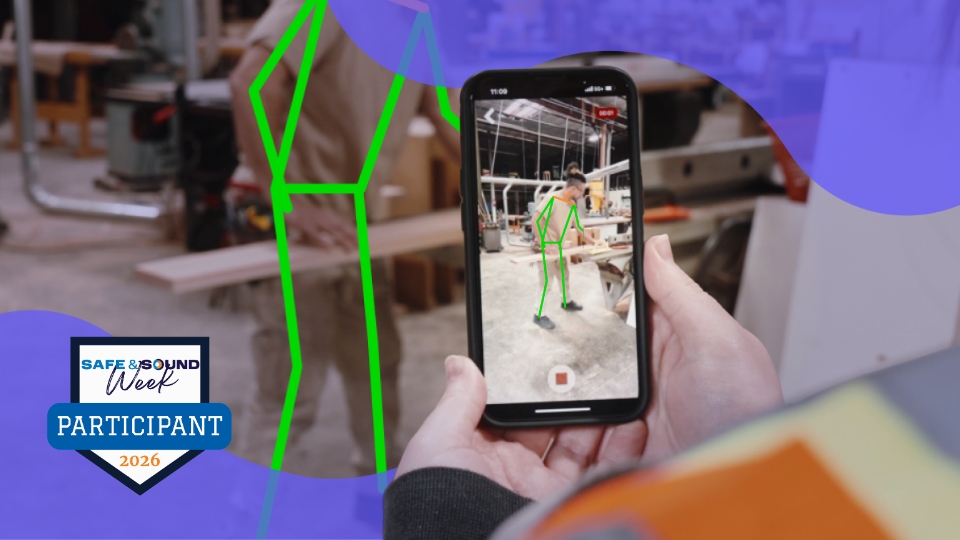
It’s easy to recognize a team for going 100 days without an injury. It’s harder to show what workers, supervisors, or operations actually changed to make the work safer.
That distinction matters during Safe + Sound Week 2026, August 10-16, when OSHA is putting a specific focus on safety and health recognition. For safety leaders, the opportunity is not simply to celebrate good results. It is to recognize the actions that help reduce risk before an injury occurs.
Ergonomics makes that possible in a concrete way. A worker identifies an awkward task. The team changes the workstation, material setup, tool, or work method. Then the task is reassessed to determine whether the targeted exposure actually improved.
That creates a stronger basis for recognition: who contributed, what changed in the work, and what evidence shows the change made a difference. The sections below look at how safety teams can use that approach to recognize meaningful ergonomic improvements and make progress visible across the organization.
A department can go months without a recordable injury while workers continue bending, reaching, gripping, or exerting force in ways that create ergonomic exposure. If recognition focuses only on the absence of injuries, those conditions can remain invisible until someone gets hurt. That is why OSHA's safety recognition guidance recommends considering leading indicators rather than relying only on lagging measures such as injuries, illnesses, or days away.
For ergonomic programs, that shifts recognition toward actions that give the organization a chance to intervene earlier.
That might include:
Those contributions matter because they create an opportunity to change the exposure before it results in an injury.
OSHA's worker participation guidance specifically encourages positive reinforcement for participation and highlights activities such as reporting hazards and helping develop safer solutions.
Recognizing participation is only the first step, though. Once a change is made, the team still needs to know whether the work actually became safer.
Suppose an operator repeatedly bends into a floor-level tote to retrieve parts. A supervisor could coach the employee on lifting technique and recognize the worker for using better body mechanics.
That may change how the task looks without changing the condition driving the exposure.
NIOSH identifies force, repetition, and posture among the physical stresses associated with work-related musculoskeletal disorder risk. Factors such as intensity, frequency, and duration influence the level of exposure as well.
If the employee still reaches into the same low tote hundreds of times during a shift, better technique may leave much of that exposure in place.
Raising or repositioning the tote changes the work itself.
The improvement may involve several people:
In that situation, the accomplishment worth recognizing is broader than one employee moving differently.
That gives safety teams a more useful question to carry into any ergonomic improvement:
What exposure did we change?
Answering that question defines what the team should look for when it reassesses the task.
Return to the tote example:
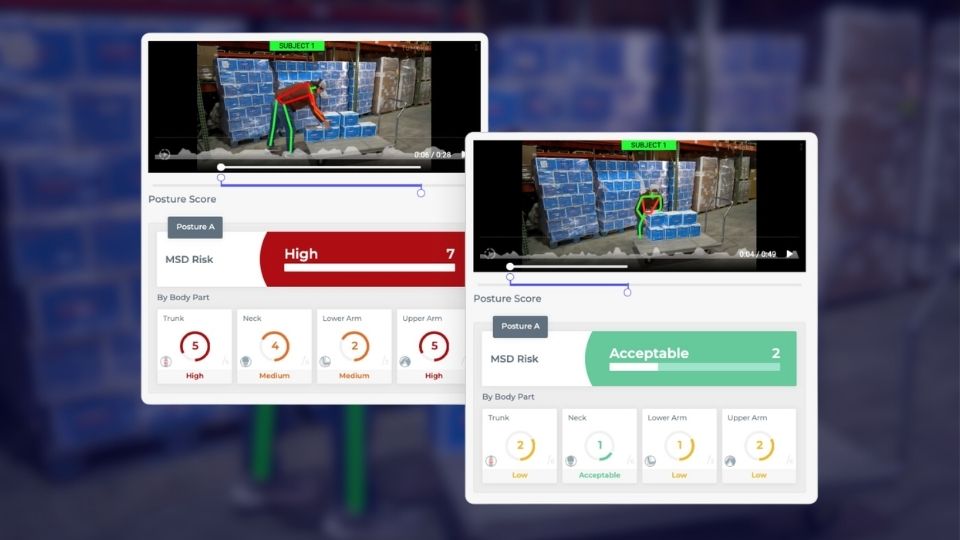
If the follow-up shows less trunk exposure, the intervention appears to be moving in the right direction.
The strength of that conclusion, though, depends on what the team compared.
If the baseline captured peak production with a full container while the follow-up captured a slower cycle with lighter material, the lower risk result may reflect the different work conditions rather than the intervention.
A useful before-and-after assessment should represent sufficiently comparable work.
Depending on the task, safety teams may need to consider:
The goal is not to create laboratory conditions. It is to make the comparison credible enough to tell whether the intervention changed the exposure the team intended to address.
Assessment results are only part of that verification. Workers can often identify effects that become apparent only after the change has been used during normal production.
A modification may solve one problem while creating another. For instance:
That is why NIOSH's ergonomic program evaluation guidance recommends following up after interventions to determine whether controls reduced the targeted risk factors and whether new ones appeared.
The assessment does not decide who deserves recognition. It gives the organization evidence behind the accomplishment:
The worker identified the problem. The team changed the work. The reassessment showed how the exposure changed.
Now the recognition has something concrete behind it.
Once the team has verified the change, the value of the work should extend beyond the corrective action that started it.
Show employees:
Depending on the task, that group may include frontline workers, supervisors, maintenance, engineering, operations, or safety.
This turns recognition into more than a reward for the people involved. It gives the rest of the organization an example of what useful safety participation looks like, from speaking up about an exposure to helping verify that the fix worked.
Before celebrating an improvement, ask:
Those same questions can guide the next ergonomic issue the team takes on.
Improving one task is manageable. The harder part is repeating the same process across dozens of jobs, departments, or facilities without losing the connection between the original exposure, the change that was made, and whether that change actually worked.
Safety teams need a consistent way to:
TuMeke Risk Suite brings those steps into one video-based ergonomic assessment workflow. Teams can capture real work, automatically analyze ergonomic risk, prioritize what needs attention, and use before-and-after data to measure the impact of interventions over time.
That turns an ergonomic improvement from “we installed the fix” into a clearer record of what was happening, what the team changed, and what improved afterward. Teams can also reassess the task after changes are made, rather than treating corrective-action closure as proof that the exposure was reduced.
Choose one task your team has struggled to assess, improve, or verify and bring it to a TuMeke demonstration. See how Risk Suite captures the work, identifies the factors driving risk, and gives your team a clearer before-and-after view of whether the change actually made a difference.
OSHA does not prohibit safety incentive or recognition programs, but they should not discourage workers from reporting injuries, illnesses, hazards, or concerns. OSHA encourages employers to reinforce positive safety activities such as participation, reporting hazards, and helping develop safer solutions.
Timing depends on the task and intervention. NIOSH recommends checking with workers after implementation, including follow-up after about one week and again after one month. Some effects may take longer to become clear, so teams should continue evaluating whether the control works under normal conditions.
OSHA's ergonomics and safety-management guidance does not prescribe one universal assessment method for every task or workplace. Safety teams should choose an approach appropriate to the exposure, the work being evaluated, and any requirements that apply to their operation.
%201.svg)


.jpg)

.jpg)

It’s easy to recognize a team for going 100 days without an injury. It’s harder to show what workers, supervisors, or operations actually changed to make the work safer.
That distinction matters during Safe + Sound Week 2026, August 10-16, when OSHA is putting a specific focus on safety and health recognition. For safety leaders, the opportunity is not simply to celebrate good results. It is to recognize the actions that help reduce risk before an injury occurs.
Ergonomics makes that possible in a concrete way. A worker identifies an awkward task. The team changes the workstation, material setup, tool, or work method. Then the task is reassessed to determine whether the targeted exposure actually improved.
That creates a stronger basis for recognition: who contributed, what changed in the work, and what evidence shows the change made a difference. The sections below look at how safety teams can use that approach to recognize meaningful ergonomic improvements and make progress visible across the organization.
A department can go months without a recordable injury while workers continue bending, reaching, gripping, or exerting force in ways that create ergonomic exposure. If recognition focuses only on the absence of injuries, those conditions can remain invisible until someone gets hurt. That is why OSHA's safety recognition guidance recommends considering leading indicators rather than relying only on lagging measures such as injuries, illnesses, or days away.
For ergonomic programs, that shifts recognition toward actions that give the organization a chance to intervene earlier.
That might include:
Those contributions matter because they create an opportunity to change the exposure before it results in an injury.
OSHA's worker participation guidance specifically encourages positive reinforcement for participation and highlights activities such as reporting hazards and helping develop safer solutions.
Recognizing participation is only the first step, though. Once a change is made, the team still needs to know whether the work actually became safer.
Suppose an operator repeatedly bends into a floor-level tote to retrieve parts. A supervisor could coach the employee on lifting technique and recognize the worker for using better body mechanics.
That may change how the task looks without changing the condition driving the exposure.
NIOSH identifies force, repetition, and posture among the physical stresses associated with work-related musculoskeletal disorder risk. Factors such as intensity, frequency, and duration influence the level of exposure as well.
If the employee still reaches into the same low tote hundreds of times during a shift, better technique may leave much of that exposure in place.
Raising or repositioning the tote changes the work itself.
The improvement may involve several people:
In that situation, the accomplishment worth recognizing is broader than one employee moving differently.
That gives safety teams a more useful question to carry into any ergonomic improvement:
What exposure did we change?
Answering that question defines what the team should look for when it reassesses the task.
Return to the tote example:
If the follow-up shows less trunk exposure, the intervention appears to be moving in the right direction.
The strength of that conclusion, though, depends on what the team compared.
If the baseline captured peak production with a full container while the follow-up captured a slower cycle with lighter material, the lower risk result may reflect the different work conditions rather than the intervention.
A useful before-and-after assessment should represent sufficiently comparable work.
Depending on the task, safety teams may need to consider:
The goal is not to create laboratory conditions. It is to make the comparison credible enough to tell whether the intervention changed the exposure the team intended to address.
Assessment results are only part of that verification. Workers can often identify effects that become apparent only after the change has been used during normal production.
A modification may solve one problem while creating another. For instance:
That is why NIOSH's ergonomic program evaluation guidance recommends following up after interventions to determine whether controls reduced the targeted risk factors and whether new ones appeared.
The assessment does not decide who deserves recognition. It gives the organization evidence behind the accomplishment:
The worker identified the problem. The team changed the work. The reassessment showed how the exposure changed.
Now the recognition has something concrete behind it.
Once the team has verified the change, the value of the work should extend beyond the corrective action that started it.
Show employees:
Depending on the task, that group may include frontline workers, supervisors, maintenance, engineering, operations, or safety.
This turns recognition into more than a reward for the people involved. It gives the rest of the organization an example of what useful safety participation looks like, from speaking up about an exposure to helping verify that the fix worked.
Before celebrating an improvement, ask:
Those same questions can guide the next ergonomic issue the team takes on.
Improving one task is manageable. The harder part is repeating the same process across dozens of jobs, departments, or facilities without losing the connection between the original exposure, the change that was made, and whether that change actually worked.
Safety teams need a consistent way to:
TuMeke Risk Suite brings those steps into one video-based ergonomic assessment workflow. Teams can capture real work, automatically analyze ergonomic risk, prioritize what needs attention, and use before-and-after data to measure the impact of interventions over time.
That turns an ergonomic improvement from “we installed the fix” into a clearer record of what was happening, what the team changed, and what improved afterward. Teams can also reassess the task after changes are made, rather than treating corrective-action closure as proof that the exposure was reduced.
Choose one task your team has struggled to assess, improve, or verify and bring it to a TuMeke demonstration. See how Risk Suite captures the work, identifies the factors driving risk, and gives your team a clearer before-and-after view of whether the change actually made a difference.
OSHA does not prohibit safety incentive or recognition programs, but they should not discourage workers from reporting injuries, illnesses, hazards, or concerns. OSHA encourages employers to reinforce positive safety activities such as participation, reporting hazards, and helping develop safer solutions.
Timing depends on the task and intervention. NIOSH recommends checking with workers after implementation, including follow-up after about one week and again after one month. Some effects may take longer to become clear, so teams should continue evaluating whether the control works under normal conditions.
OSHA's ergonomics and safety-management guidance does not prescribe one universal assessment method for every task or workplace. Safety teams should choose an approach appropriate to the exposure, the work being evaluated, and any requirements that apply to their operation.
.jpg)