


Free 14-Day Trial
Perform unlimited ergonomic assessments for two weeks. All you need is your phone.

Key Takeaway
Ergonomic data is only useful if it helps teams change the work. A risk score may show where exposure exists, but it does not fix a workstation, change a reach distance, train a worker, or prove that a control worked. That is where many ergonomics programs lose momentum.
To reduce MSD risk, safety teams need a clear workflow from assessment to recommendation, corrective action, training, documentation, and follow-up. The goal is not just to identify risk. The goal is to reduce the exposure that creates it.
Many ergonomics programs can identify risk.
A safety manager observes the task. An ergonomist scores the job. A supervisor confirms the process. A report gets created. The team agrees that the work creates strain.
Then the finding has to compete with everything else happening on the floor.
Production still has to run. Maintenance has higher-priority repairs. Supervisors have staffing gaps. Engineering needs more detail. Workers keep doing the same task while the report waits for review.
That is where the gap appears.
The assessment may be complete, but the risk is still active.
OSHA describes ergonomics as an ongoing process that includes management support, worker involvement, training, problem identification, hazard control, and progress evaluation. OSHA also notes that an ergonomic process should become part of daily operations, not a one-time project.
That distinction matters.
An assessment is a step in the process. It is not the outcome.
This gap shows up in everyday industrial tasks.
A worker may load boxes from a pallet to a conveyor. The assessment shows repeated trunk flexion as pallet height drops throughout the shift. The finding is valid, but the next step matters:
Without that follow-through, the assessment may prove the risk exists while the exposure stays in place.
The same issue can happen in packing, picking, assembly, machine feeding, airline baggage handling, sanitation, case forming, wrapping, and jam clearing.
A report might identify awkward shoulder posture during overhead work. But if the part location, tool position, line speed, or reach distance never changes, the risk remains part of the job.
A score might flag forceful exertion during manual material handling. But if the weight, grip, container design, or lift distance stays the same, workers still face the same physical demand.
NIOSH identifies force, repetition, and posture as major contributors to physical stress in job tasks. NIOSH also notes that risk depends on intensity, frequency, and duration.
That is why the next step cannot be vague.
If the exposure is specific, the action has to be specific too.
Action should change the exposure.
That does not always mean a major engineering project. Sometimes the best first step is simple.
A team may:
The key is that the action should connect directly to the risk driver.
If the assessment shows high trunk flexion, the fix should address bending. If it shows repeated shoulder elevation, the fix should address reach height or part location. If it shows forceful exertion, the fix should address weight, grip, friction, tool design, or mechanical assistance.
OSHA states that work tasks should be designed to limit exposure to ergonomic risk factors and that engineering controls are preferred where possible. NIOSH makes a similar point through the hierarchy of controls, identifying elimination and engineering controls as stronger options for reducing MSD hazards.
That is why ergonomic recommendations should not stop at “use proper body mechanics.”
Training can help, but only when the task gives workers a realistic way to use what they were taught. If the workstation layout, pace, tool position, or material flow still forces workers to twist, reach, or overextend, they will usually keep moving that way to keep up with production.
The fix has to address the task itself, not just the worker’s behavior.
A fix is not complete just because someone made a change.
The team still needs to know whether the change reduced exposure.
That requires follow-up.
NIOSH recommends comparing data before and after an intervention, including job analyses, checklists, worker complaints, symptom surveys, injury records, productivity indicators, and quality indicators.
That does not mean every fix needs a complex study.
But it does mean teams should compare the task before and after the change:
This is where many programs struggle.
They may know a fix was installed, but not whether the exposure improved. Or they may reassess the task later without a clean way to compare it to the original condition.
That makes it harder to learn from each change.
It also makes it harder to show leadership why the change is worth the time, cost, or operational disruption.
Finding ergonomic risk is only the first step. The harder part is turning that finding into a clear next move.
TuMeke helps safety teams close that gap. With TuMeke Risk Suite, teams can capture video of real work, analyze movement with AI, identify what is driving the risk, and use that information to guide practical improvements.
Instead of treating assessment, documentation, training, and follow-up as separate steps, TuMeke helps teams connect the full workflow.
With TuMeke, safety teams can:
A team should be able to see the exposure, understand what is driving it, decide what needs to change, explain the fix, document the action, and check whether the task improved after the change.
TuMeke gives teams a more practical way to move from assessment to action. Start your free 14-day trial and see how quickly your team can turn real work into visible risk data, practical recommendations, and measurable follow-up.
Why is an ergonomic assessment not enough by itself?
An assessment identifies risk, but it does not automatically change the work. Teams still need to choose controls, assign ownership, train workers, document the action, and check whether exposure decreased after the change.
What should safety teams do after identifying ergonomic risk?
Safety teams should connect the finding to a specific action. That may include changing the workstation, reducing reach distance, improving grip, adjusting work height, adding lift assistance, or training workers around a safer method.
How can teams tell whether an ergonomic fix worked?
Teams should compare the task before and after the change. They can review movement patterns, worker feedback, symptom reports, job analyses, incident data, productivity indicators, and whether the new control is being used correctly.
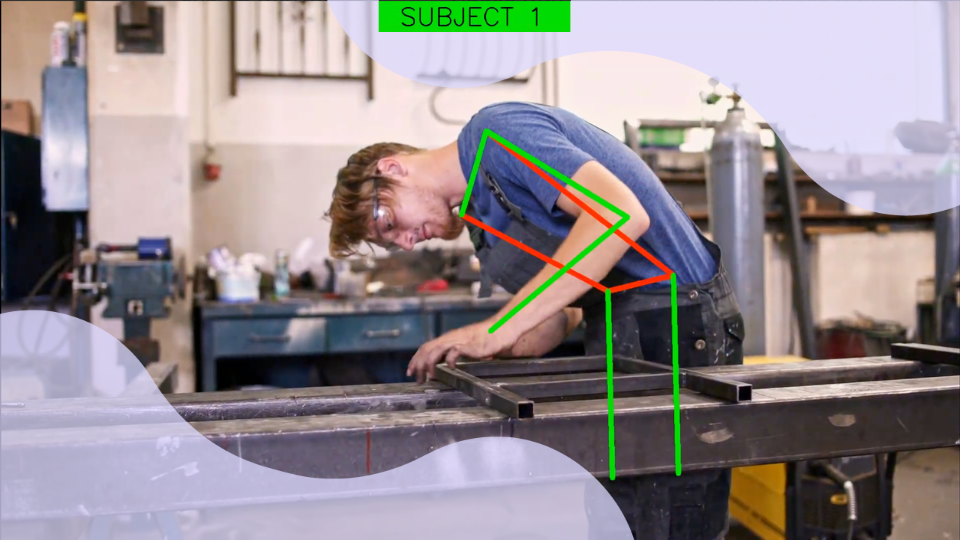
Why does visual documentation matter in ergonomics?
Visual documentation gives safety teams, supervisors, workers, and leadership a shared view of the task. It helps everyone see the specific reach, bend, lift, twist, or repeated motion that needs attention.
How does TuMeke support ergonomic follow-up?
TuMeke helps teams capture task video, analyze movement risk, document findings, generate recommendations, and compare conditions over time. That gives teams a clearer way to track whether changes reduce exposure.
%201.svg)


.jpg)

.jpg)
.jpg)

Key Takeaway
Ergonomic data is only useful if it helps teams change the work. A risk score may show where exposure exists, but it does not fix a workstation, change a reach distance, train a worker, or prove that a control worked. That is where many ergonomics programs lose momentum.
To reduce MSD risk, safety teams need a clear workflow from assessment to recommendation, corrective action, training, documentation, and follow-up. The goal is not just to identify risk. The goal is to reduce the exposure that creates it.
Many ergonomics programs can identify risk.
A safety manager observes the task. An ergonomist scores the job. A supervisor confirms the process. A report gets created. The team agrees that the work creates strain.
Then the finding has to compete with everything else happening on the floor.
Production still has to run. Maintenance has higher-priority repairs. Supervisors have staffing gaps. Engineering needs more detail. Workers keep doing the same task while the report waits for review.
That is where the gap appears.
The assessment may be complete, but the risk is still active.
OSHA describes ergonomics as an ongoing process that includes management support, worker involvement, training, problem identification, hazard control, and progress evaluation. OSHA also notes that an ergonomic process should become part of daily operations, not a one-time project.
That distinction matters.
An assessment is a step in the process. It is not the outcome.
This gap shows up in everyday industrial tasks.
A worker may load boxes from a pallet to a conveyor. The assessment shows repeated trunk flexion as pallet height drops throughout the shift. The finding is valid, but the next step matters:
Without that follow-through, the assessment may prove the risk exists while the exposure stays in place.
The same issue can happen in packing, picking, assembly, machine feeding, airline baggage handling, sanitation, case forming, wrapping, and jam clearing.
A report might identify awkward shoulder posture during overhead work. But if the part location, tool position, line speed, or reach distance never changes, the risk remains part of the job.
A score might flag forceful exertion during manual material handling. But if the weight, grip, container design, or lift distance stays the same, workers still face the same physical demand.
NIOSH identifies force, repetition, and posture as major contributors to physical stress in job tasks. NIOSH also notes that risk depends on intensity, frequency, and duration.
That is why the next step cannot be vague.
If the exposure is specific, the action has to be specific too.
Action should change the exposure.
That does not always mean a major engineering project. Sometimes the best first step is simple.
A team may:
The key is that the action should connect directly to the risk driver.
If the assessment shows high trunk flexion, the fix should address bending. If it shows repeated shoulder elevation, the fix should address reach height or part location. If it shows forceful exertion, the fix should address weight, grip, friction, tool design, or mechanical assistance.
OSHA states that work tasks should be designed to limit exposure to ergonomic risk factors and that engineering controls are preferred where possible. NIOSH makes a similar point through the hierarchy of controls, identifying elimination and engineering controls as stronger options for reducing MSD hazards.
That is why ergonomic recommendations should not stop at “use proper body mechanics.”
Training can help, but only when the task gives workers a realistic way to use what they were taught. If the workstation layout, pace, tool position, or material flow still forces workers to twist, reach, or overextend, they will usually keep moving that way to keep up with production.
The fix has to address the task itself, not just the worker’s behavior.
A fix is not complete just because someone made a change.
The team still needs to know whether the change reduced exposure.
That requires follow-up.
NIOSH recommends comparing data before and after an intervention, including job analyses, checklists, worker complaints, symptom surveys, injury records, productivity indicators, and quality indicators.
That does not mean every fix needs a complex study.
But it does mean teams should compare the task before and after the change:
This is where many programs struggle.
They may know a fix was installed, but not whether the exposure improved. Or they may reassess the task later without a clean way to compare it to the original condition.
That makes it harder to learn from each change.
It also makes it harder to show leadership why the change is worth the time, cost, or operational disruption.
Finding ergonomic risk is only the first step. The harder part is turning that finding into a clear next move.
TuMeke helps safety teams close that gap. With TuMeke Risk Suite, teams can capture video of real work, analyze movement with AI, identify what is driving the risk, and use that information to guide practical improvements.
Instead of treating assessment, documentation, training, and follow-up as separate steps, TuMeke helps teams connect the full workflow.
With TuMeke, safety teams can:
A team should be able to see the exposure, understand what is driving it, decide what needs to change, explain the fix, document the action, and check whether the task improved after the change.
TuMeke gives teams a more practical way to move from assessment to action. Start your free 14-day trial and see how quickly your team can turn real work into visible risk data, practical recommendations, and measurable follow-up.
Why is an ergonomic assessment not enough by itself?
An assessment identifies risk, but it does not automatically change the work. Teams still need to choose controls, assign ownership, train workers, document the action, and check whether exposure decreased after the change.
What should safety teams do after identifying ergonomic risk?
Safety teams should connect the finding to a specific action. That may include changing the workstation, reducing reach distance, improving grip, adjusting work height, adding lift assistance, or training workers around a safer method.
How can teams tell whether an ergonomic fix worked?
Teams should compare the task before and after the change. They can review movement patterns, worker feedback, symptom reports, job analyses, incident data, productivity indicators, and whether the new control is being used correctly.
Why does visual documentation matter in ergonomics?
Visual documentation gives safety teams, supervisors, workers, and leadership a shared view of the task. It helps everyone see the specific reach, bend, lift, twist, or repeated motion that needs attention.
How does TuMeke support ergonomic follow-up?
TuMeke helps teams capture task video, analyze movement risk, document findings, generate recommendations, and compare conditions over time. That gives teams a clearer way to track whether changes reduce exposure.