


Free 14-Day Trial
Perform unlimited ergonomic assessments for two weeks. All you need is your phone.

.jpg)
For many warehouses and fulfillment operations, Q4 brings a surge in holiday orders that increases picking, packing, material handling, and shipping activity. Those changes can increase ergonomic exposure even when the job itself looks the same. This article covers five warehouse ergonomic risks safety and operations teams should review before Q4 volume increases, including what to look for in the task and where changes may be needed.
That change in workload matters because NIOSH identifies intensity, frequency, and duration as factors that affect WMSD risk. A box may weigh the same in October as it did in July, but the exposure changes when workers handle it more often or spend more of the shift doing so.
Pace can add to that demand. OSHA’s warehouse ergonomics guidance notes that stress and fatigue associated with fast work pace can exacerbate MSDs. Before Q4 volume ramps up, safety teams should focus on where those conditions are likely to change. The five areas below are a good place to start.
The heaviest box in the warehouse may get the most attention, but weight is only part of the lifting demand.
The Revised NIOSH Lifting Equation also considers where the hands are positioned, how far the load travels vertically, and whether the worker twists. Lifting frequency, task duration, and grip quality also affect the assessment.
Before peak season, review lifting jobs expected to see higher volume. Look at where loads start and end and how far workers have to reach. Pay attention to twisting and any load or grip conditions that make the lift harder.
Picking conditions can change significantly during the same task.
A worker picking cases from a pallet may start around waist height, then bend repeatedly as the pallet empties. When workers build pallets, the opposite can happen as the load rises and reaching increases.
Slotting can add to the problem. A product that requires an occasional low or high reach during normal volume may be handled far more often during Q4.
OSHA identifies bending and overhead reaching among common warehouse ergonomic risk factors. Assessments should capture the more demanding parts of the picking cycle, not just the easiest portion to observe.
High-volume picking and packing can expose workers to the same hand, wrist, and shoulder movements over and over throughout the shift. OSHA specifically identifies repetitive hand, wrist, and shoulder movements as a concern in high-volume item picking.
Before Q4 volume increases, review how quickly these tasks cycle and how much of the shift workers spend performing them. A movement that does not look especially demanding on its own may deserve more attention when it is repeated continuously for long periods.
Peak volume can increase how often workers move carts, pallet jacks, and other material-handling equipment.
The conditions used for the assessment need to match the actual job. If workers routinely move a fully loaded cart, assessing it while nearly empty will not tell you much about the push or pull demand.
Consider the load and the condition of the equipment, then look at the route itself. Travel distance and floor condition can change how much effort the task requires.
OSHA notes that poorly maintained floors can increase the force required to move manual material-handling equipment. Cracks, debris, ruts, bumps, and uneven surfaces are all conditions worth checking along the travel route.
Higher production rates can shorten recovery time between cycles, while longer shifts can extend the time workers spend performing physically demanding work.
Safety teams should understand what production rates and overtime are expected during peak operations. They should also look at break schedules and which jobs are likely to occupy the largest share of the shift.
These conditions are shaped by operations decisions as well as safety controls. Staffing, scheduling, and production expectations all affect how the work is ultimately performed.
Start with the jobs most likely to change when Q4 volume increases. Projected volume can help point you toward those tasks, while injury and discomfort reports or supervisor observations can show where concerns already exist.
Once you have a short list, observe the work under conditions that represent the exposure you want to understand. Capture the demanding or representative parts of the job, not simply the easiest portion to observe.
Then look at what is driving the result. Worker technique may play a role, but task design, equipment, or production conditions may be contributing to the same exposure.
Establish a baseline before making changes, then reassess the task under comparable conditions afterward. That gives the team a way to determine whether the targeted exposure actually improved.
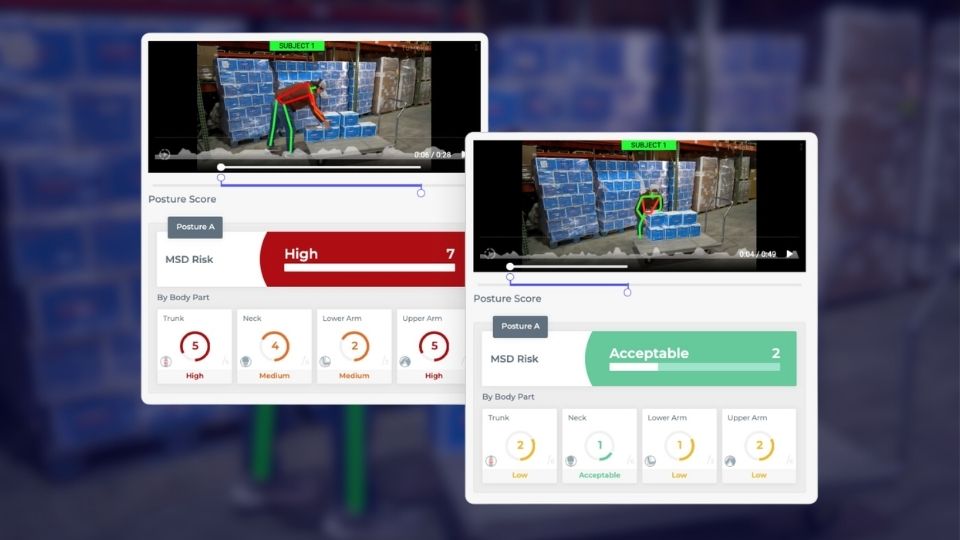
For teams evaluating a large number of warehouse jobs, TuMeke’s warehouse ergonomics software uses video-based assessments to analyze real work. Risk Suite can help teams identify and prioritize higher-risk tasks, then track the impact of interventions over time. Its analysis goes beyond posture to include factors such as repetition, duration, force, grip, balance, and job context.
To see how that workflow could support your pre-peak ergonomics review, request a TuMeke demo.
Federal OSHA does not have a specific ergonomics standard that requires warehouses to perform ergonomic assessments on a set schedule. However, recognized serious ergonomic hazards may be addressed under the OSH Act’s General Duty Clause when the applicable criteria are met. OSHA also provides warehouse-specific guidance for recognizing and controlling ergonomic hazards.
No. OSHA does not set a single maximum weight that employees are allowed to lift. Lifting risk depends on more than the weight of the object. The Revised NIOSH Lifting Equation also considers factors such as reach distance, lifting height, twisting, frequency, duration, and grip quality.
Worker discomfort, injury trends, supervisor observations, and changes to the job can all signal that a task deserves another look. NIOSH also recommends considering changes to equipment, processes, work pace, and task demands when identifying potential WMSD risk factors.
Not necessarily. OSHA’s grocery warehousing guidance recommends a gradual work-rate ramp-up for new selectors because production rates developed for experienced workers may be too demanding for new hires. That is especially relevant when warehouses add workers for peak periods.
Reassess the task after the change and compare the results with the original baseline. NIOSH recommends following up on ergonomic interventions to confirm that they reduced the targeted risk factors and did not create new ones. The comparison is most useful when the task is evaluated under similar operating conditions.
%201.svg)



.jpg)


For many warehouses and fulfillment operations, Q4 brings a surge in holiday orders that increases picking, packing, material handling, and shipping activity. Those changes can increase ergonomic exposure even when the job itself looks the same. This article covers five warehouse ergonomic risks safety and operations teams should review before Q4 volume increases, including what to look for in the task and where changes may be needed.
That change in workload matters because NIOSH identifies intensity, frequency, and duration as factors that affect WMSD risk. A box may weigh the same in October as it did in July, but the exposure changes when workers handle it more often or spend more of the shift doing so.
Pace can add to that demand. OSHA’s warehouse ergonomics guidance notes that stress and fatigue associated with fast work pace can exacerbate MSDs. Before Q4 volume ramps up, safety teams should focus on where those conditions are likely to change. The five areas below are a good place to start.
The heaviest box in the warehouse may get the most attention, but weight is only part of the lifting demand.
The Revised NIOSH Lifting Equation also considers where the hands are positioned, how far the load travels vertically, and whether the worker twists. Lifting frequency, task duration, and grip quality also affect the assessment.
Before peak season, review lifting jobs expected to see higher volume. Look at where loads start and end and how far workers have to reach. Pay attention to twisting and any load or grip conditions that make the lift harder.
Picking conditions can change significantly during the same task.
A worker picking cases from a pallet may start around waist height, then bend repeatedly as the pallet empties. When workers build pallets, the opposite can happen as the load rises and reaching increases.
Slotting can add to the problem. A product that requires an occasional low or high reach during normal volume may be handled far more often during Q4.
OSHA identifies bending and overhead reaching among common warehouse ergonomic risk factors. Assessments should capture the more demanding parts of the picking cycle, not just the easiest portion to observe.
High-volume picking and packing can expose workers to the same hand, wrist, and shoulder movements over and over throughout the shift. OSHA specifically identifies repetitive hand, wrist, and shoulder movements as a concern in high-volume item picking.
Before Q4 volume increases, review how quickly these tasks cycle and how much of the shift workers spend performing them. A movement that does not look especially demanding on its own may deserve more attention when it is repeated continuously for long periods.
Peak volume can increase how often workers move carts, pallet jacks, and other material-handling equipment.
The conditions used for the assessment need to match the actual job. If workers routinely move a fully loaded cart, assessing it while nearly empty will not tell you much about the push or pull demand.
Consider the load and the condition of the equipment, then look at the route itself. Travel distance and floor condition can change how much effort the task requires.
OSHA notes that poorly maintained floors can increase the force required to move manual material-handling equipment. Cracks, debris, ruts, bumps, and uneven surfaces are all conditions worth checking along the travel route.
Higher production rates can shorten recovery time between cycles, while longer shifts can extend the time workers spend performing physically demanding work.
Safety teams should understand what production rates and overtime are expected during peak operations. They should also look at break schedules and which jobs are likely to occupy the largest share of the shift.
These conditions are shaped by operations decisions as well as safety controls. Staffing, scheduling, and production expectations all affect how the work is ultimately performed.
Start with the jobs most likely to change when Q4 volume increases. Projected volume can help point you toward those tasks, while injury and discomfort reports or supervisor observations can show where concerns already exist.
Once you have a short list, observe the work under conditions that represent the exposure you want to understand. Capture the demanding or representative parts of the job, not simply the easiest portion to observe.
Then look at what is driving the result. Worker technique may play a role, but task design, equipment, or production conditions may be contributing to the same exposure.
Establish a baseline before making changes, then reassess the task under comparable conditions afterward. That gives the team a way to determine whether the targeted exposure actually improved.
For teams evaluating a large number of warehouse jobs, TuMeke’s warehouse ergonomics software uses video-based assessments to analyze real work. Risk Suite can help teams identify and prioritize higher-risk tasks, then track the impact of interventions over time. Its analysis goes beyond posture to include factors such as repetition, duration, force, grip, balance, and job context.
To see how that workflow could support your pre-peak ergonomics review, request a TuMeke demo.
Federal OSHA does not have a specific ergonomics standard that requires warehouses to perform ergonomic assessments on a set schedule. However, recognized serious ergonomic hazards may be addressed under the OSH Act’s General Duty Clause when the applicable criteria are met. OSHA also provides warehouse-specific guidance for recognizing and controlling ergonomic hazards.
No. OSHA does not set a single maximum weight that employees are allowed to lift. Lifting risk depends on more than the weight of the object. The Revised NIOSH Lifting Equation also considers factors such as reach distance, lifting height, twisting, frequency, duration, and grip quality.
Worker discomfort, injury trends, supervisor observations, and changes to the job can all signal that a task deserves another look. NIOSH also recommends considering changes to equipment, processes, work pace, and task demands when identifying potential WMSD risk factors.
Not necessarily. OSHA’s grocery warehousing guidance recommends a gradual work-rate ramp-up for new selectors because production rates developed for experienced workers may be too demanding for new hires. That is especially relevant when warehouses add workers for peak periods.
Reassess the task after the change and compare the results with the original baseline. NIOSH recommends following up on ergonomic interventions to confirm that they reduced the targeted risk factors and did not create new ones. The comparison is most useful when the task is evaluated under similar operating conditions.