


Prueba gratuita de 14 días
Realice evaluaciones ergonómicas ilimitadas durante dos semanas. Todo lo que necesitas es tu teléfono.


En TuMeke, siempre hemos creído que el riesgo ergonómico es algo más que solo una mala postura.
Claro que la postura importa, pero cualquiera que haya pasado tiempo analizando el trabajo del mundo real sabe que la postura es solo una variable en la ecuación. El riesgo también está conformado por la repetición, duración, fuerza, el agarre, equilibrio y el contexto del trabajo en sí. Al mismo tiempo, la mayoría de los flujos de trabajo ergonómicos aún dependen de entradas manuales y pasos de puntuación que entorpecen a los equipos y hacen que las evaluaciones sean difíciles de escalar.
Esta es la brecha que hemos estado trabajando para cerrar.
Hoy, estamos entusiasmados de compartir la próxima generación de nuestra Suite de Riesgos, un gran paso en la ergonomía impulsada por IA, diseñada en torno a dos avances importantes: evaluaciones totalmente automatizadas y análisis de movimiento más allá de la postura.
Durante años, la tecnología ergonómica ha ayudado a los equipos a digitalizar las evaluaciones y a avanzar más rápido que los métodos estrictamente manuales. Esto ha logrado mejoras importantes. Pero en muchos casos, el flujo de trabajo aún depende de entradas de datos subjetivos, interpretación manual y un análisis cuadrado centrado principalmente en la postura.
No creemos que esto sea suficiente.
Si el objetivo es ayudar a las empresas a evaluar el riesgo de manera precisa, consistente y a escala, la tecnología tiene que lograr más. Tiene que reducir el trabajo manual, no sólo reorganizarlo. Y tiene que analizar más de los factores que realmente impulsan el riesgo en el mundo real.
Esa es la misión detrás de esta versión.
El primer avance importante de esta versión son las evaluaciones totalmente automatizadas.
Esto significa que la Suite de Riesgos elimina las entradas manuales de datos y los pasos de puntuación que históricamente han entorpecido las evaluaciones ergonómicas. En lugar de pedir a los usuarios que rellenen los espacios, el sistema se encarga de la mayor parte del trabajo automáticamente.
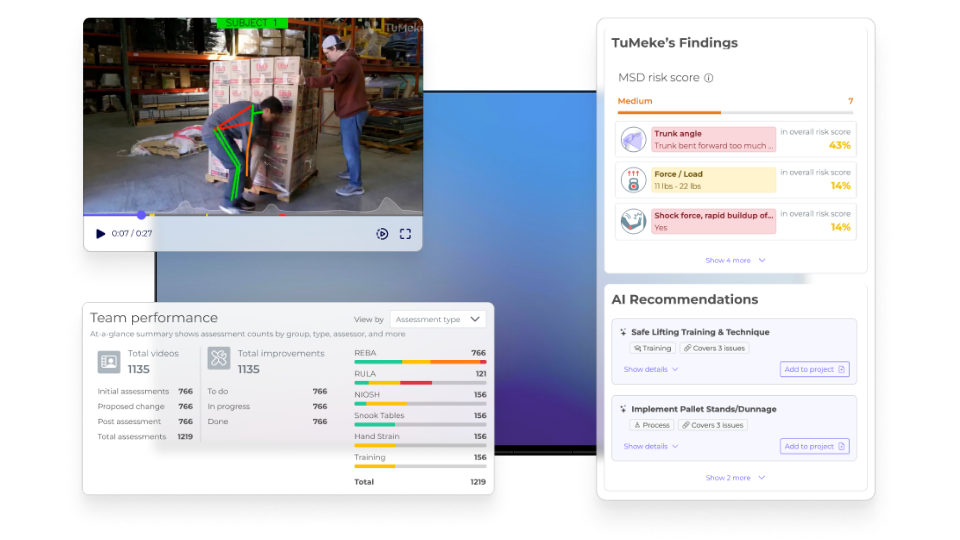
Eso importa por algunas razones.
El segundo gran avance es el Análisis del Movimiento Más Allá de la Postura.
Como se mencionó antes, la postura es solo una variable del riesgo ergonómico. Con esta versión, la Suite de Riesgos amplía el análisis para incluir:
Esto brinda a los equipos una visión más completa de lo que realmente está sucediendo en una tarea y lo que podría estar contribuyendo al riesgo.
Esto es especialmente importante porque el trabajo en el mundo real es dinámico. Los datos de un instante de la postura por sí sola no siempre explican por qué una tarea es arriesgada, cómo debe priorizarse o qué debe cambiar. Al analizar un conjunto más amplio de factores, podemos ayudar a los equipos a entender el trabajo de manera más completa y a tomar mejores decisiones sobre dónde enfocarse.
Desde una perspectiva tecnológica, esta versión refleja muchas mejoras en visión computarizada, modelado, diseño de productos y simplificación del flujo de trabajo.
Una cosa es identificar la postura a partir del video. Otra es construir un sistema que pueda interpretar automáticamente una mayor parte de la tarea, reducir la dependencia de las entradas de datos manuales y entregar resultados de una manera que sea práctica para equipos de seguridad reales.
Ese ha sido nuestro enfoque desde el principio. El objetivo nunca ha sido construir tecnología que sea impresionante por sí sola, pero difícil de aplicar en el campo. Queremos construir herramientas que hagan que el análisis de ergonomía sea más rápido, fácil, intuitivo y escalable para las personas que hacen ese trabajo todos los días.
Para nuestros clientes, la próxima generación de la Suite de riesgos significa una mejor manera de evaluar el riesgo ergonómico.
Significa menos tiempo dedicado a los pasos manuales.
Significa un flujo de trabajo más intuitivo.
Significa una comprensión más amplia y útil de lo que está impulsando el riesgo en una tarea.
Y, en última instancia, significa una plataforma que se adapta mejor a las realidades de los programas de ergonomía a gran escala, donde la velocidad, consistencia, usabilidad e integridad importan.
Vemos este lanzamiento como un gran paso adelante, pero no una meta final.
La oportunidad más amplia que tenemos ante nosotros es ayudar a las empresas a comprender mejor el movimiento humano, evaluar el riesgo de formas más inteligentes y convertir esa información en un trabajo más seguro y mejores resultados.
La próxima generación de la Suite de Riesgos nos impulsa de manera importante en esa dirección.
Estamos entusiasmados por compartirles más en las próximas semanas, y aún más emocionados de ver lo que nuestros clientes pueden hacen con TuMeke.
Si desea obtener más información, solicite una demostración hoy mismo o regístrese para nuestro próximo webinar. Nos encantaría mostrarle todas nuestras novedades.
%201.svg)


.jpg)

.jpg)
.jpg)

En TuMeke, siempre hemos creído que el riesgo ergonómico es algo más que solo una mala postura.
Claro que la postura importa, pero cualquiera que haya pasado tiempo analizando el trabajo del mundo real sabe que la postura es solo una variable en la ecuación. El riesgo también está conformado por la repetición, duración, fuerza, el agarre, equilibrio y el contexto del trabajo en sí. Al mismo tiempo, la mayoría de los flujos de trabajo ergonómicos aún dependen de entradas manuales y pasos de puntuación que entorpecen a los equipos y hacen que las evaluaciones sean difíciles de escalar.
Esta es la brecha que hemos estado trabajando para cerrar.
Hoy, estamos entusiasmados de compartir la próxima generación de nuestra Suite de Riesgos, un gran paso en la ergonomía impulsada por IA, diseñada en torno a dos avances importantes: evaluaciones totalmente automatizadas y análisis de movimiento más allá de la postura.
Durante años, la tecnología ergonómica ha ayudado a los equipos a digitalizar las evaluaciones y a avanzar más rápido que los métodos estrictamente manuales. Esto ha logrado mejoras importantes. Pero en muchos casos, el flujo de trabajo aún depende de entradas de datos subjetivos, interpretación manual y un análisis cuadrado centrado principalmente en la postura.
No creemos que esto sea suficiente.
Si el objetivo es ayudar a las empresas a evaluar el riesgo de manera precisa, consistente y a escala, la tecnología tiene que lograr más. Tiene que reducir el trabajo manual, no sólo reorganizarlo. Y tiene que analizar más de los factores que realmente impulsan el riesgo en el mundo real.
Esa es la misión detrás de esta versión.
El primer avance importante de esta versión son las evaluaciones totalmente automatizadas.
Esto significa que la Suite de Riesgos elimina las entradas manuales de datos y los pasos de puntuación que históricamente han entorpecido las evaluaciones ergonómicas. En lugar de pedir a los usuarios que rellenen los espacios, el sistema se encarga de la mayor parte del trabajo automáticamente.
Eso importa por algunas razones.
El segundo gran avance es el Análisis del Movimiento Más Allá de la Postura.
Como se mencionó antes, la postura es solo una variable del riesgo ergonómico. Con esta versión, la Suite de Riesgos amplía el análisis para incluir:
Esto brinda a los equipos una visión más completa de lo que realmente está sucediendo en una tarea y lo que podría estar contribuyendo al riesgo.
Esto es especialmente importante porque el trabajo en el mundo real es dinámico. Los datos de un instante de la postura por sí sola no siempre explican por qué una tarea es arriesgada, cómo debe priorizarse o qué debe cambiar. Al analizar un conjunto más amplio de factores, podemos ayudar a los equipos a entender el trabajo de manera más completa y a tomar mejores decisiones sobre dónde enfocarse.
Desde una perspectiva tecnológica, esta versión refleja muchas mejoras en visión computarizada, modelado, diseño de productos y simplificación del flujo de trabajo.
Una cosa es identificar la postura a partir del video. Otra es construir un sistema que pueda interpretar automáticamente una mayor parte de la tarea, reducir la dependencia de las entradas de datos manuales y entregar resultados de una manera que sea práctica para equipos de seguridad reales.
Ese ha sido nuestro enfoque desde el principio. El objetivo nunca ha sido construir tecnología que sea impresionante por sí sola, pero difícil de aplicar en el campo. Queremos construir herramientas que hagan que el análisis de ergonomía sea más rápido, fácil, intuitivo y escalable para las personas que hacen ese trabajo todos los días.
Para nuestros clientes, la próxima generación de la Suite de riesgos significa una mejor manera de evaluar el riesgo ergonómico.
Significa menos tiempo dedicado a los pasos manuales.
Significa un flujo de trabajo más intuitivo.
Significa una comprensión más amplia y útil de lo que está impulsando el riesgo en una tarea.
Y, en última instancia, significa una plataforma que se adapta mejor a las realidades de los programas de ergonomía a gran escala, donde la velocidad, consistencia, usabilidad e integridad importan.
Vemos este lanzamiento como un gran paso adelante, pero no una meta final.
La oportunidad más amplia que tenemos ante nosotros es ayudar a las empresas a comprender mejor el movimiento humano, evaluar el riesgo de formas más inteligentes y convertir esa información en un trabajo más seguro y mejores resultados.
La próxima generación de la Suite de Riesgos nos impulsa de manera importante en esa dirección.
Estamos entusiasmados por compartirles más en las próximas semanas, y aún más emocionados de ver lo que nuestros clientes pueden hacen con TuMeke.
Si desea obtener más información, solicite una demostración hoy mismo o regístrese para nuestro próximo webinar. Nos encantaría mostrarle todas nuestras novedades.