


Prueba gratuita de 14 días
Realice evaluaciones ergonómicas ilimitadas durante dos semanas. Todo lo que necesitas es tu teléfono.

Idea clave
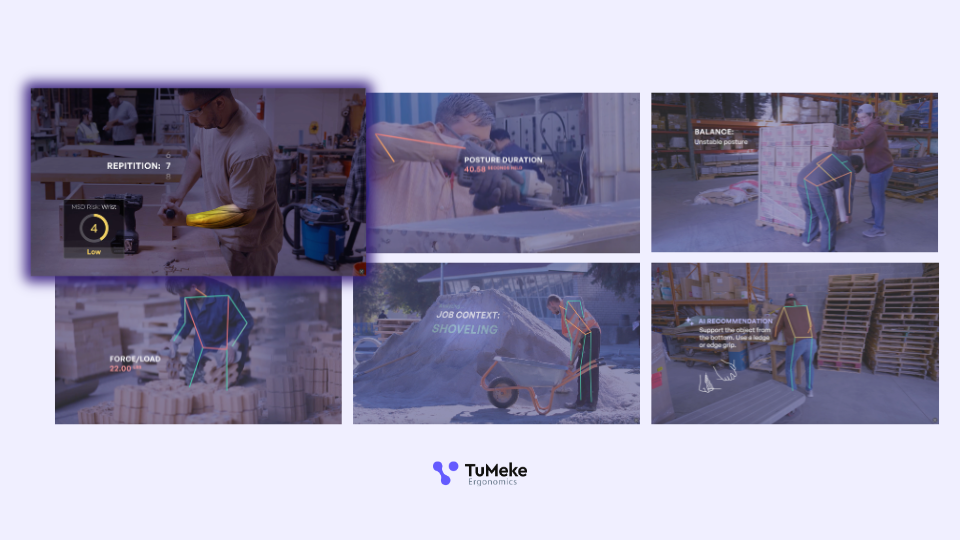
La postura es importante en la ergonomía, pero no cuenta la historia completa sobre el riesgo. Una tarea puede parecer aceptable después de una observación breve, mientras que sigue exponiendo a los trabajadores a fuerza, repetición, tensión en el agarre, fatiga o un tiempo de exposición prolongado. Esto es importante porque el riesgo de TME se suele acumular a lo largo del turno laboral, no solo en un momento preciso. Para comprender el riesgo ergonómico real, los equipos de seguridad deben considerar el conjunto de la postura, movimiento, fuerza, duración, ritmo y contexto de la tarea.
Las evaluaciones basadas en la postura son valiosas.
Pueden mostrar cuándo un trabajador se inclina demasiado, gira el tronco, alcanza objetos por encima de la cabeza o trabaja fuera de una posición neutra. Estos hallazgos son importantes porque una postura incómoda puede aumentar la tensión en los músculos, tendones, articulaciones, nervios y la columna vertebral.
Pero la postura es solo una variable de la fórmula para la exposición ergonómica.
El NIOSH explica que los trastornos musculoesqueléticos relacionados con el trabajo pueden estar relacionados con esfuerzos súbitos o sostenidos, vibraciones, movimientos repetitivos o posturas incómodas. La OSHA también identifica factores de riesgo como levantar objetos pesados, inclinarse, alcanzar por encima de la cabeza, empujar o jalar cargas pesadas, posturas incómodas y tareas repetitivas en su panorama general de la ergonomía.
Ahí está el área de oportunidad.
Una captura de un solo instante de la postura puede mostrar cómo se veía el cuerpo en una parte del trabajo. Puede que no muestre con qué frecuencia ocurrió el movimiento, cuánta fuerza utilizó el trabajador, cuánto tiempo continuó la tarea, cómo cambió el agarre o cómo el ritmo de trabajo afectó la recuperación.
En el trabajo industrial real, esos detalles suelen cambiar el panorama del riesgo.
Un trabajador puede levantar desde una altura razonable sin una flexión profunda obvia o un alcance por encima de la cabeza. Pero si ese levantamiento ocurre cientos de veces por turno, con agarres deficientes y tiempo de recuperación limitado, la tarea podría implicar un riesgo importante para sufrir un TME.
La tarea no se volvió riesgosa porque la postura en sí pareciera extrema.
Se volvió riesgosa porque la exposición a la misma se acumuló.
Los riesgos ergonómicos ocultos se suelen evidenciar en tareas que a simple vista parecen normales.
Un gerente de seguridad podría pasar por una estación de trabajo y no ver ninguna señal de alerta obvia. El trabajador está de pie, erguido. La carga no es particularmente pesada. El alcance no parece excesivo. En comparación con otros trabajos en las instalaciones, la tarea podría parecer controlada.
Sin embargo, el riesgo puede esconderse en los detalles:
Estas son las tareas que podrían pasarse por alto cuando los equipos se enfocan principalmente en cómo se ve la postura al hacer una observación rápida.
El NIOSH deja claro este punto de exposición más amplio en su guía sobre la identificación de factores de riesgo ergonómicos. Afirma que el estrés físico proviene de la fuerza, repetición y posturas requeridas en las actividades laborales, y que el riesgo de TME depende de la intensidad, frecuencia y duración de la tarea.
Eso les da a los equipos de seguridad una mejor pregunta que plantearse.
No es solo, “¿Esta postura se ve mal?”
Sino, “¿A qué está expuesto el trabajador a lo largo de toda la tarea?”
Una tarea podría parecer aceptable porque la parte más riesgosa no siempre es visible en un solo momento:
Pero muchos riesgos de TME provienen de la exposición acumulativa. La tensión se acumula por repetición, fuerza, duración, ritmo, agarre deficiente y recuperación limitada.
Por eso, pensar solo en la postura podría generar una falsa confianza:
Aquí es donde la evaluación debe coincidir con el trabajo.
La cuestión no es si la postura importa. Sí importa. La cuestión es si la postura por sí sola le da al equipo suficiente información para decidir qué necesita cambiar.
En la mayoría de los casos, no es así.
Las herramientas ergonómicas tradicionales no son el problema.
Muchos métodos reconocidos de por sí ya consideran más que solo la postura cuando los equipos los aplican correctamente. Por ejemplo, la Ecuación de Levantamiento Revisada del NIOSH considera el peso de la carga, la ubicación de las manos, la distancia de desplazamiento, el ángulo de asimetría, la frecuencia de levantamiento, la duración de la tarea, el tiempo de descanso y la calidad del agarre.
Eso no es ergonomía que se limite a la postura.
El problema es lo que sucede en la práctica.
Muchos equipos de seguridad no tienen suficiente tiempo, personal o apoyo ergonómico para recopilar todos los detalles necesarios, a nivel de tarea, para una evaluación completa. Podrían basarse en observaciones rápidas, fotografías estáticas, entrevistas a trabajadores, listas de verificación básicas o sus propias memorias del último recorrido por la planta.
Esos datos pueden ayudar, pero pueden dejar algunos vacíos:
El NIOSH también señala que ninguna lista de verificación única se adapta a todas las situaciones y recomienda recopilar detalles de la tarea como el tiempo de ciclo, patrones de movimiento, características de las herramientas, vibración, condiciones de temperatura y otros factores cuando sea adecuado.
Ahí es donde muchos programas de ergonomía no logran cumplir con lo necesario.
Saben que el riesgo es más complejo que la postura. Es solo que no siempre cuentan con una forma práctica de capturar el panorama completo, de manera rápida y consistente.
El riesgo de TME no es un problema menor o secundario.
En su publicación, Elementos de los programas de ergonomía, el NIOSH cita datos de la Oficina de Estadísticas Laborales de los EE. UU., (BLS, por sus siglas en inglés) que muestran que los TME relacionados con el trabajo representaron el 29% de los casos no mortales de lesiones y enfermedades ocupacionales que implicaron días de ausencia laboral.
Estas lesiones afectan primero a las personas. Pueden manifestarse como dolor, movimientos restringidos, ausencias laborales, citas médicas y un regreso más difícil al trabajo. Para los trabajadores, un TME no es solo un dato del registro de lesiones. Puede afectar cómo duermen, cómo se mueven y qué pueden hacer fuera del trabajo.
También pueden afectar el flujo de personal y de producción, condicionar tareas restringidas, horas extras, costos de indemnización para trabajadores y la credibilidad del programa de seguridad.
Por eso la detección temprana es importante:
Cuanto antes se pueda detectar esta exposición, antes se podrán priorizar las correcciones adecuadas.
Los equipos de seguridad necesitan una visión más amplia de la tarea.
Eso no significa que cada evaluación deba complicarse. Significa que la evaluación debe capturar los factores de riesgo que determinan la exposición a riesgos.
Una revisión ergonómica más sólida debería considerar:
Esto ayuda a los equipos a pasar de la observación general a la toma de decisiones práctica.
En lugar de decir, “Esta tarea parece estar bien,” el equipo puede preguntarse:
Esto podría concluir con un ajuste de accesorios, asistencia de levantamiento, rediseño de herramientas, cambio de estación de trabajo, rotación de puestos, mejora del flujo de materiales, control de altura de pallets, mejora del agarre o ajuste del ritmo.
El objetivo no es calificar la tarea solo por calificarla.
El objetivo es identificar el factor de riesgo con la suficiente claridad para poder actuar.
La postura es importante, pero los equipos de seguridad necesitan más que información estática de la postura para entender cómo se acumula el riesgo ergonómico durante el trabajo real.
TuMeke ayuda a los equipos a capturar ese panorama más amplio. Con análisis de movimiento basado en video, TuMeke convierte tareas del mundo real en información visible de riesgos ergonómicos que los equipos de seguridad, operaciones y ergonomía pueden revisar en conjunto.
En lugar de depender de una única observación rápida, una lista de verificación o los recuerdos de alguien sobre la tarea, los equipos pueden ver cómo se lleva a cabo el trabajo en el mundo real e identificar qué hay detrás del riesgo.
Con TuMeke, los equipos de seguridad pueden:
El objetivo es una mejor visibilidad de la exposición real, para que los equipos de seguridad puedan identificar riesgos ocultos antes y llevar a cabo cambios prácticos antes de que pequeños problemas de movimiento se conviertan en lesiones.
Conozca cómo TuMeke puede ayudar a su equipo a ir más allá de las evaluaciones basadas solo en postura y a descubrir el riesgo real detrás del trabajo. Agende una demostración hoy mismo.
¿Qué es la ergonomía basada únicamente en la postura?
La ergonomía basada únicamente en la postura se centra principalmente en la posición del cuerpo, como agacharse, estirarse, girar o trabajar por encima de la cabeza. La postura es importante, pero no muestra el panorama completo del riesgo a menos que los equipos también consideren la fuerza, repetición, duración, agarre, ritmo y contexto de la tarea.
¿Por qué una tarea puede parecer segura pero aun así generar riesgo ergonómico?
Una tarea puede parecer segura durante una observación breve, pero aun así generar riesgo con el tiempo. Los movimientos repetitivos, la fuerza de agarre excesiva, el tiempo de exposición prolongado, los agarres deficientes, la vibración o la recuperación limitada pueden generar tensión incluso cuando la postura no parece grave.
¿Qué factores de riesgo deben incluir las evaluaciones ergonómicas?
Las evaluaciones ergonómicas deben considerar la postura, fuerza, repetición, duración, agarre, equilibrio, diseño de estación de trabajo, ritmo de la tarea y tiempo de recuperación. Los factores indicados dependen de la tarea, pero los equipos deben evitar juzgar el riesgo basándose únicamente en la postura.
¿Cómo ayuda el análisis ergonómico basado en video?
El análisis basado en video proporciona a los equipos un registro visual de la tarea. Ayuda a los líderes de seguridad, supervisores, trabajadores y ergonomistas a revisar los mismos patrones de movimiento, identificar los factores de riesgo principales y diseñar soluciones prácticas con menos dependencia en la memoria o la opinión personal.
%201.svg)


.jpg)

.jpg)

Idea clave
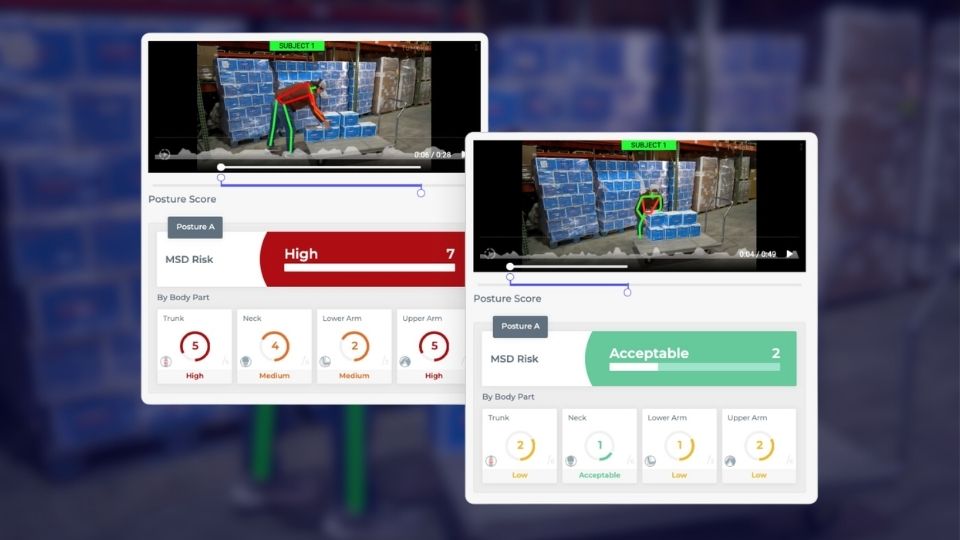
La postura es importante en la ergonomía, pero no cuenta la historia completa sobre el riesgo. Una tarea puede parecer aceptable después de una observación breve, mientras que sigue exponiendo a los trabajadores a fuerza, repetición, tensión en el agarre, fatiga o un tiempo de exposición prolongado. Esto es importante porque el riesgo de TME se suele acumular a lo largo del turno laboral, no solo en un momento preciso. Para comprender el riesgo ergonómico real, los equipos de seguridad deben considerar el conjunto de la postura, movimiento, fuerza, duración, ritmo y contexto de la tarea.
Las evaluaciones basadas en la postura son valiosas.
Pueden mostrar cuándo un trabajador se inclina demasiado, gira el tronco, alcanza objetos por encima de la cabeza o trabaja fuera de una posición neutra. Estos hallazgos son importantes porque una postura incómoda puede aumentar la tensión en los músculos, tendones, articulaciones, nervios y la columna vertebral.
Pero la postura es solo una variable de la fórmula para la exposición ergonómica.
El NIOSH explica que los trastornos musculoesqueléticos relacionados con el trabajo pueden estar relacionados con esfuerzos súbitos o sostenidos, vibraciones, movimientos repetitivos o posturas incómodas. La OSHA también identifica factores de riesgo como levantar objetos pesados, inclinarse, alcanzar por encima de la cabeza, empujar o jalar cargas pesadas, posturas incómodas y tareas repetitivas en su panorama general de la ergonomía.
Ahí está el área de oportunidad.
Una captura de un solo instante de la postura puede mostrar cómo se veía el cuerpo en una parte del trabajo. Puede que no muestre con qué frecuencia ocurrió el movimiento, cuánta fuerza utilizó el trabajador, cuánto tiempo continuó la tarea, cómo cambió el agarre o cómo el ritmo de trabajo afectó la recuperación.
En el trabajo industrial real, esos detalles suelen cambiar el panorama del riesgo.
Un trabajador puede levantar desde una altura razonable sin una flexión profunda obvia o un alcance por encima de la cabeza. Pero si ese levantamiento ocurre cientos de veces por turno, con agarres deficientes y tiempo de recuperación limitado, la tarea podría implicar un riesgo importante para sufrir un TME.
La tarea no se volvió riesgosa porque la postura en sí pareciera extrema.
Se volvió riesgosa porque la exposición a la misma se acumuló.
Los riesgos ergonómicos ocultos se suelen evidenciar en tareas que a simple vista parecen normales.
Un gerente de seguridad podría pasar por una estación de trabajo y no ver ninguna señal de alerta obvia. El trabajador está de pie, erguido. La carga no es particularmente pesada. El alcance no parece excesivo. En comparación con otros trabajos en las instalaciones, la tarea podría parecer controlada.
Sin embargo, el riesgo puede esconderse en los detalles:
Estas son las tareas que podrían pasarse por alto cuando los equipos se enfocan principalmente en cómo se ve la postura al hacer una observación rápida.
El NIOSH deja claro este punto de exposición más amplio en su guía sobre la identificación de factores de riesgo ergonómicos. Afirma que el estrés físico proviene de la fuerza, repetición y posturas requeridas en las actividades laborales, y que el riesgo de TME depende de la intensidad, frecuencia y duración de la tarea.
Eso les da a los equipos de seguridad una mejor pregunta que plantearse.
No es solo, “¿Esta postura se ve mal?”
Sino, “¿A qué está expuesto el trabajador a lo largo de toda la tarea?”
Una tarea podría parecer aceptable porque la parte más riesgosa no siempre es visible en un solo momento:
Pero muchos riesgos de TME provienen de la exposición acumulativa. La tensión se acumula por repetición, fuerza, duración, ritmo, agarre deficiente y recuperación limitada.
Por eso, pensar solo en la postura podría generar una falsa confianza:
Aquí es donde la evaluación debe coincidir con el trabajo.
La cuestión no es si la postura importa. Sí importa. La cuestión es si la postura por sí sola le da al equipo suficiente información para decidir qué necesita cambiar.
En la mayoría de los casos, no es así.
Las herramientas ergonómicas tradicionales no son el problema.
Muchos métodos reconocidos de por sí ya consideran más que solo la postura cuando los equipos los aplican correctamente. Por ejemplo, la Ecuación de Levantamiento Revisada del NIOSH considera el peso de la carga, la ubicación de las manos, la distancia de desplazamiento, el ángulo de asimetría, la frecuencia de levantamiento, la duración de la tarea, el tiempo de descanso y la calidad del agarre.
Eso no es ergonomía que se limite a la postura.
El problema es lo que sucede en la práctica.
Muchos equipos de seguridad no tienen suficiente tiempo, personal o apoyo ergonómico para recopilar todos los detalles necesarios, a nivel de tarea, para una evaluación completa. Podrían basarse en observaciones rápidas, fotografías estáticas, entrevistas a trabajadores, listas de verificación básicas o sus propias memorias del último recorrido por la planta.
Esos datos pueden ayudar, pero pueden dejar algunos vacíos:
El NIOSH también señala que ninguna lista de verificación única se adapta a todas las situaciones y recomienda recopilar detalles de la tarea como el tiempo de ciclo, patrones de movimiento, características de las herramientas, vibración, condiciones de temperatura y otros factores cuando sea adecuado.
Ahí es donde muchos programas de ergonomía no logran cumplir con lo necesario.
Saben que el riesgo es más complejo que la postura. Es solo que no siempre cuentan con una forma práctica de capturar el panorama completo, de manera rápida y consistente.
El riesgo de TME no es un problema menor o secundario.
En su publicación, Elementos de los programas de ergonomía, el NIOSH cita datos de la Oficina de Estadísticas Laborales de los EE. UU., (BLS, por sus siglas en inglés) que muestran que los TME relacionados con el trabajo representaron el 29% de los casos no mortales de lesiones y enfermedades ocupacionales que implicaron días de ausencia laboral.
Estas lesiones afectan primero a las personas. Pueden manifestarse como dolor, movimientos restringidos, ausencias laborales, citas médicas y un regreso más difícil al trabajo. Para los trabajadores, un TME no es solo un dato del registro de lesiones. Puede afectar cómo duermen, cómo se mueven y qué pueden hacer fuera del trabajo.
También pueden afectar el flujo de personal y de producción, condicionar tareas restringidas, horas extras, costos de indemnización para trabajadores y la credibilidad del programa de seguridad.
Por eso la detección temprana es importante:
Cuanto antes se pueda detectar esta exposición, antes se podrán priorizar las correcciones adecuadas.
Los equipos de seguridad necesitan una visión más amplia de la tarea.
Eso no significa que cada evaluación deba complicarse. Significa que la evaluación debe capturar los factores de riesgo que determinan la exposición a riesgos.
Una revisión ergonómica más sólida debería considerar:
Esto ayuda a los equipos a pasar de la observación general a la toma de decisiones práctica.
En lugar de decir, “Esta tarea parece estar bien,” el equipo puede preguntarse:
Esto podría concluir con un ajuste de accesorios, asistencia de levantamiento, rediseño de herramientas, cambio de estación de trabajo, rotación de puestos, mejora del flujo de materiales, control de altura de pallets, mejora del agarre o ajuste del ritmo.
El objetivo no es calificar la tarea solo por calificarla.
El objetivo es identificar el factor de riesgo con la suficiente claridad para poder actuar.
La postura es importante, pero los equipos de seguridad necesitan más que información estática de la postura para entender cómo se acumula el riesgo ergonómico durante el trabajo real.
TuMeke ayuda a los equipos a capturar ese panorama más amplio. Con análisis de movimiento basado en video, TuMeke convierte tareas del mundo real en información visible de riesgos ergonómicos que los equipos de seguridad, operaciones y ergonomía pueden revisar en conjunto.
En lugar de depender de una única observación rápida, una lista de verificación o los recuerdos de alguien sobre la tarea, los equipos pueden ver cómo se lleva a cabo el trabajo en el mundo real e identificar qué hay detrás del riesgo.
Con TuMeke, los equipos de seguridad pueden:
El objetivo es una mejor visibilidad de la exposición real, para que los equipos de seguridad puedan identificar riesgos ocultos antes y llevar a cabo cambios prácticos antes de que pequeños problemas de movimiento se conviertan en lesiones.
Conozca cómo TuMeke puede ayudar a su equipo a ir más allá de las evaluaciones basadas solo en postura y a descubrir el riesgo real detrás del trabajo. Agende una demostración hoy mismo.
¿Qué es la ergonomía basada únicamente en la postura?
La ergonomía basada únicamente en la postura se centra principalmente en la posición del cuerpo, como agacharse, estirarse, girar o trabajar por encima de la cabeza. La postura es importante, pero no muestra el panorama completo del riesgo a menos que los equipos también consideren la fuerza, repetición, duración, agarre, ritmo y contexto de la tarea.
¿Por qué una tarea puede parecer segura pero aun así generar riesgo ergonómico?
Una tarea puede parecer segura durante una observación breve, pero aun así generar riesgo con el tiempo. Los movimientos repetitivos, la fuerza de agarre excesiva, el tiempo de exposición prolongado, los agarres deficientes, la vibración o la recuperación limitada pueden generar tensión incluso cuando la postura no parece grave.
¿Qué factores de riesgo deben incluir las evaluaciones ergonómicas?
Las evaluaciones ergonómicas deben considerar la postura, fuerza, repetición, duración, agarre, equilibrio, diseño de estación de trabajo, ritmo de la tarea y tiempo de recuperación. Los factores indicados dependen de la tarea, pero los equipos deben evitar juzgar el riesgo basándose únicamente en la postura.
¿Cómo ayuda el análisis ergonómico basado en video?
El análisis basado en video proporciona a los equipos un registro visual de la tarea. Ayuda a los líderes de seguridad, supervisores, trabajadores y ergonomistas a revisar los mismos patrones de movimiento, identificar los factores de riesgo principales y diseñar soluciones prácticas con menos dependencia en la memoria o la opinión personal.
.jpg)