


Prueba gratuita de 14 días
Realice evaluaciones ergonómicas ilimitadas durante dos semanas. Todo lo que necesitas es tu teléfono.

.png)
Idea principal
Los trabajadores corrigen sus posturas riesgosas más rápido cuando pueden verlas por sí mismos. La retroalimentación en tiempo real, como los video con superposiciones de esqueleto, les muestra exactamente dónde ocurre la tensión, y ahí es donde los métodos de capacitación más antiguos se pueden quedar cortos. La retroalimentación visual cambia la seguridad de un enfoque reactivo a uno proactivo, al hacer que la orientación sea visual, instantánea y autodirigida; esto favorece cambios de comportamiento duradero sin ralentizar el trabajo.
La mayoría de los programas de seguridad ergonómica dependen de que los supervisores estén atentos constantemente a movimientos riesgosos, que se corrigen después de estar presentes mucho tiempo. Es por esto que para cuando se da la retroalimentación, es posible que el daño ya esté hecho. El trabajador se ha flexionado, torcido o hecho levantamientos de una forma que estresa la espalda, hombros o rodillas. En el mejor de los casos, la corrección llega demasiado tarde. En el peor de los casos, se siente como echarle la culpa al trabajador y se ignora.
Esta forma de pensar supone que la orientación cambiará el comportamiento, pero las investigaciones cuentan una historia diferente: la retroalimentación visual en tiempo real supera a la capacitación tradicional y al estilo de enseñanza en aula cuando se trata de cambios de movimiento.
Incluso una capacitación completa no puede mantenerse al corriente con la variación diaria en las tareas y posturas. Es por eso que OSHA permite citatorios para riesgos ergonómicos bajo la Cláusula General de Deber, incluso sin una norma específica. Si un riesgo es grave, reconocido y prevenible, los empleadores deben abordarlo.
Además, los riesgos son reales. En 2023, casi un millón de trabajadores perdieron tiempo laboral por lesiones que los sacaron del trabajo, según el Oficina de Estadísticas Laborales. Una gran parte de esos casos fueron trastornos musculoesqueléticos (TME), el tipo de lesiones que se supone que los programas ergonómicos previenen. Pero al tener métodos obsoletos de “observar y corregir” aún en vigor, son demasiados los riesgos que pasan desapercibidos o no se abordan.
Si la observación y la corrección no funcionan lo suficientemente rápido, ¿qué puede hacerlo? Ahí es donde la retroalimentación en tiempo real cambia el juego.
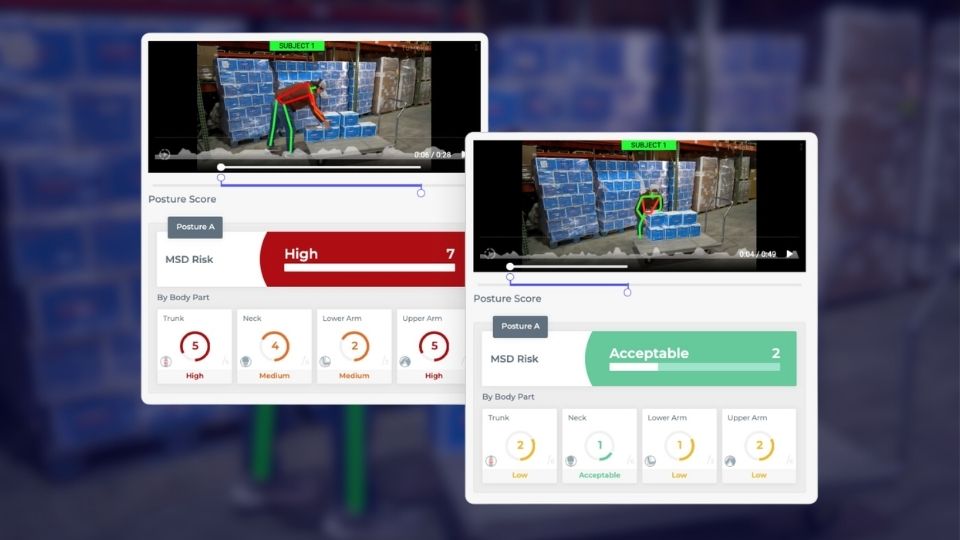
La retroalimentación en tiempo real brinda a los trabajadores una visión en vivo de cómo se mueven, para que puedan corregir una postura arriesgada mientras sucede, no después, y todo lo que usted necesita es un celular. El moderno software de evaluación ergonómica captura un video corto y aprovecha la IA y visión computarizada para superponer un esqueleto digital. Resalta los ángulos de las articulaciones, la postura y otros movimientos de alto riesgo. Después, puntúa la tarea al instante con base en herramientas ergonómicas comprobadas como REBA, RULA, NIOSH, Snook, RSI, e incluso evaluaciones personalizadas y sugiere ajustes de inmediato.
Este proceso refleja lo que los expertos en factores humanos llaman retroalimentación cinemática aumentada. Muestra el cuerpo en movimiento, hace visible la tensión y ayuda a corregirlo antes de que se convierta en un hábito, lo que lleva a cambios de postura medibles en tiempo real. Y a diferencia de las sesiones de capacitación o el papeleo, sucede en el lugar, sin esperas, sesgos ni conjeturas.
Saber cómo funciona es solo una parte de la imagen completa. La cuestión más importante es entender por qué los trabajadores responden mejor a esta técnica.
Es más probable que los trabajadores cambien cuando la retroalimentación es clara, inmediata y no se siente como una crítica. Es por eso que las herramientas visuales como las superposiciones de esqueleto funcionan: son neutrales y van directo al grano. El sistema simplemente muestra lo que está sucediendo y permite que el trabajador decida qué hacer a continuación. Esa simplicidad genera confianza.
También hay una ciencia detrás de esto: las investigaciones del aprendizaje motor muestran que la retroalimentación visual es una de las formas más rápidas de construir nuevos hábitos de movimiento. Las mejores prácticas de capacitación propias de la OSHA exigen una experiencia práctica y retroalimentación de los alumnos, ambos de los cuales proporcionan este tipo de herramienta. No solo es más atractivo, también es más efectivo.
Entonces, ¿cuál es la solución que hace que todo esto sea posible en el mundo real, sin sensores, dispositivos vestibles o equipo extra?
Es ambas cosas, y eso es importante. La retroalimentación visual en tiempo real no es solo una actualización tecnológica. Cambia todo el modelo de seguridad. En lugar de depender de observaciones retrasadas y correcciones posteriores a los hechos, brinda a los trabajadores la capacidad de ver el riesgo y ajustarse en el momento.
Ese cambio, de reactivo a proactivo, se alinea con los principios básicos de seguridad de la OSHA, que enfatizan la participación de los trabajadores, la mejora continua y los controles prácticos y efectivos. La OSHA continúa reforzando la seguridad ergonómica en virtud de la Cláusula General de Deber cuando se reconocen riesgos graves y existen controles factibles. Las herramientas de retroalimentación visual cumplen con ese estándar, hacen visibles los peligros y ayudan a los trabajadores a reducir la exposición en tiempo real.
Y como este tipo de retroalimentación no requiere dispositivos vestibles, sensores o equipos costosos, es escalable. Funciona en equipos y tareas sin agregar complejidad.
TuMeke es una plataforma de seguridad construida para prevenir lesiones musculoesqueléticas antes de que sucedan, sin regaños, papeleo o equipo vestible. Usando solo un teléfono inteligente, TuMeke captura videos cortos del trabajo real que se está realizando.
Luego, con IA y visión por computadora, superpone un esqueleto digital en el video e identifica ángulos de articulaciones, riesgos de postura y movimientos incómodos. Después califica la tarea con base en herramientas ergonómicas de confianza como RULA y la ecuación de levantamiento de NIOSH, para ofrecer retroalimentación en tiempo real sobre la que los trabajadores pueden actuar de inmediato.
Sin sensores. Sin equipo. No hay que esperar a que un representante de seguridad prepare un informe. Solo una guía visual clara que ayuda a las personas a arreglar pequeños movimientos antes de que se conviertan en lesiones mayores.
Para los líderes de seguridad, TuMeke ofrece una manera más rápida y consistente de ejecutar evaluaciones ergonómicas en equipos y ubicaciones. Estandariza cómo se mide el riesgo, respalda la capacitación de los trabajadores con herramientas de aprendizaje visual y rastrea las tendencias para ayudarle a priorizar las soluciones que realmente importan.
Si su enfoque actual aún se basa en observaciones y regaños, es hora de hacer algo mejor. Programe una demostración hoy mismo y vea cómo TuMeke le ayuda a los trabajadores a moverse de forma más segura, rápida e inteligente.
¿Puede la retroalimentación en tiempo real ayudar a reducir las lesiones ergonómicas?
Sí. La retroalimentación en tiempo real ayuda a los trabajadores a corregir la postura en el lugar, reduciendo la exposición a riesgos musculoesqueléticos antes de que ocurran lesiones.
¿Qué es una superposición de esqueleto en la seguridad en el lugar de trabajo?
Una superposición de esqueleto es una imagen digital que rastrea la postura y el movimiento articular de un trabajador durante una tarea para resaltar posiciones corporales riesgosas en tiempo real.
¿La OSHA permite citatorios por riesgos ergonómicos?
Sí. OSHA puede citar a los empleadores por riesgos ergonómicos bajo la Cláusula de Deber General cuando se conocen riesgos graves y existen controles factibles.
¿En temas de seguridad, por qué la retroalimentación visual es mejor que las pláticas?
La retroalimentación visual es más rápida, clara y atractiva que las pláticas. Le ayuda a los trabajadores a ver problemas de movimiento y solucionarlos de inmediato, sin necesidad de recibir orientación por parte de un tercero.
¿Qué herramientas se utilizan para puntuar el riesgo ergonómico en tiempo real?
Herramientas como RULA, REBA y la Ecuación de Levantamiento de NIOSH se utilizan para evaluar las tareas de postura y levantamiento durante el análisis de video en tiempo real.
%201.svg)


.jpg)

.jpg)

Idea principal
Los trabajadores corrigen sus posturas riesgosas más rápido cuando pueden verlas por sí mismos. La retroalimentación en tiempo real, como los video con superposiciones de esqueleto, les muestra exactamente dónde ocurre la tensión, y ahí es donde los métodos de capacitación más antiguos se pueden quedar cortos. La retroalimentación visual cambia la seguridad de un enfoque reactivo a uno proactivo, al hacer que la orientación sea visual, instantánea y autodirigida; esto favorece cambios de comportamiento duradero sin ralentizar el trabajo.
La mayoría de los programas de seguridad ergonómica dependen de que los supervisores estén atentos constantemente a movimientos riesgosos, que se corrigen después de estar presentes mucho tiempo. Es por esto que para cuando se da la retroalimentación, es posible que el daño ya esté hecho. El trabajador se ha flexionado, torcido o hecho levantamientos de una forma que estresa la espalda, hombros o rodillas. En el mejor de los casos, la corrección llega demasiado tarde. En el peor de los casos, se siente como echarle la culpa al trabajador y se ignora.
Esta forma de pensar supone que la orientación cambiará el comportamiento, pero las investigaciones cuentan una historia diferente: la retroalimentación visual en tiempo real supera a la capacitación tradicional y al estilo de enseñanza en aula cuando se trata de cambios de movimiento.
Incluso una capacitación completa no puede mantenerse al corriente con la variación diaria en las tareas y posturas. Es por eso que OSHA permite citatorios para riesgos ergonómicos bajo la Cláusula General de Deber, incluso sin una norma específica. Si un riesgo es grave, reconocido y prevenible, los empleadores deben abordarlo.
Además, los riesgos son reales. En 2023, casi un millón de trabajadores perdieron tiempo laboral por lesiones que los sacaron del trabajo, según el Oficina de Estadísticas Laborales. Una gran parte de esos casos fueron trastornos musculoesqueléticos (TME), el tipo de lesiones que se supone que los programas ergonómicos previenen. Pero al tener métodos obsoletos de “observar y corregir” aún en vigor, son demasiados los riesgos que pasan desapercibidos o no se abordan.
Si la observación y la corrección no funcionan lo suficientemente rápido, ¿qué puede hacerlo? Ahí es donde la retroalimentación en tiempo real cambia el juego.
La retroalimentación en tiempo real brinda a los trabajadores una visión en vivo de cómo se mueven, para que puedan corregir una postura arriesgada mientras sucede, no después, y todo lo que usted necesita es un celular. El moderno software de evaluación ergonómica captura un video corto y aprovecha la IA y visión computarizada para superponer un esqueleto digital. Resalta los ángulos de las articulaciones, la postura y otros movimientos de alto riesgo. Después, puntúa la tarea al instante con base en herramientas ergonómicas comprobadas como REBA, RULA, NIOSH, Snook, RSI, e incluso evaluaciones personalizadas y sugiere ajustes de inmediato.
Este proceso refleja lo que los expertos en factores humanos llaman retroalimentación cinemática aumentada. Muestra el cuerpo en movimiento, hace visible la tensión y ayuda a corregirlo antes de que se convierta en un hábito, lo que lleva a cambios de postura medibles en tiempo real. Y a diferencia de las sesiones de capacitación o el papeleo, sucede en el lugar, sin esperas, sesgos ni conjeturas.
Saber cómo funciona es solo una parte de la imagen completa. La cuestión más importante es entender por qué los trabajadores responden mejor a esta técnica.
Es más probable que los trabajadores cambien cuando la retroalimentación es clara, inmediata y no se siente como una crítica. Es por eso que las herramientas visuales como las superposiciones de esqueleto funcionan: son neutrales y van directo al grano. El sistema simplemente muestra lo que está sucediendo y permite que el trabajador decida qué hacer a continuación. Esa simplicidad genera confianza.
También hay una ciencia detrás de esto: las investigaciones del aprendizaje motor muestran que la retroalimentación visual es una de las formas más rápidas de construir nuevos hábitos de movimiento. Las mejores prácticas de capacitación propias de la OSHA exigen una experiencia práctica y retroalimentación de los alumnos, ambos de los cuales proporcionan este tipo de herramienta. No solo es más atractivo, también es más efectivo.
Entonces, ¿cuál es la solución que hace que todo esto sea posible en el mundo real, sin sensores, dispositivos vestibles o equipo extra?
Es ambas cosas, y eso es importante. La retroalimentación visual en tiempo real no es solo una actualización tecnológica. Cambia todo el modelo de seguridad. En lugar de depender de observaciones retrasadas y correcciones posteriores a los hechos, brinda a los trabajadores la capacidad de ver el riesgo y ajustarse en el momento.
Ese cambio, de reactivo a proactivo, se alinea con los principios básicos de seguridad de la OSHA, que enfatizan la participación de los trabajadores, la mejora continua y los controles prácticos y efectivos. La OSHA continúa reforzando la seguridad ergonómica en virtud de la Cláusula General de Deber cuando se reconocen riesgos graves y existen controles factibles. Las herramientas de retroalimentación visual cumplen con ese estándar, hacen visibles los peligros y ayudan a los trabajadores a reducir la exposición en tiempo real.
Y como este tipo de retroalimentación no requiere dispositivos vestibles, sensores o equipos costosos, es escalable. Funciona en equipos y tareas sin agregar complejidad.
TuMeke es una plataforma de seguridad construida para prevenir lesiones musculoesqueléticas antes de que sucedan, sin regaños, papeleo o equipo vestible. Usando solo un teléfono inteligente, TuMeke captura videos cortos del trabajo real que se está realizando.
Luego, con IA y visión por computadora, superpone un esqueleto digital en el video e identifica ángulos de articulaciones, riesgos de postura y movimientos incómodos. Después califica la tarea con base en herramientas ergonómicas de confianza como RULA y la ecuación de levantamiento de NIOSH, para ofrecer retroalimentación en tiempo real sobre la que los trabajadores pueden actuar de inmediato.
Sin sensores. Sin equipo. No hay que esperar a que un representante de seguridad prepare un informe. Solo una guía visual clara que ayuda a las personas a arreglar pequeños movimientos antes de que se conviertan en lesiones mayores.
Para los líderes de seguridad, TuMeke ofrece una manera más rápida y consistente de ejecutar evaluaciones ergonómicas en equipos y ubicaciones. Estandariza cómo se mide el riesgo, respalda la capacitación de los trabajadores con herramientas de aprendizaje visual y rastrea las tendencias para ayudarle a priorizar las soluciones que realmente importan.
Si su enfoque actual aún se basa en observaciones y regaños, es hora de hacer algo mejor. Programe una demostración hoy mismo y vea cómo TuMeke le ayuda a los trabajadores a moverse de forma más segura, rápida e inteligente.
¿Puede la retroalimentación en tiempo real ayudar a reducir las lesiones ergonómicas?
Sí. La retroalimentación en tiempo real ayuda a los trabajadores a corregir la postura en el lugar, reduciendo la exposición a riesgos musculoesqueléticos antes de que ocurran lesiones.
¿Qué es una superposición de esqueleto en la seguridad en el lugar de trabajo?
Una superposición de esqueleto es una imagen digital que rastrea la postura y el movimiento articular de un trabajador durante una tarea para resaltar posiciones corporales riesgosas en tiempo real.
¿La OSHA permite citatorios por riesgos ergonómicos?
Sí. OSHA puede citar a los empleadores por riesgos ergonómicos bajo la Cláusula de Deber General cuando se conocen riesgos graves y existen controles factibles.
¿En temas de seguridad, por qué la retroalimentación visual es mejor que las pláticas?
La retroalimentación visual es más rápida, clara y atractiva que las pláticas. Le ayuda a los trabajadores a ver problemas de movimiento y solucionarlos de inmediato, sin necesidad de recibir orientación por parte de un tercero.
¿Qué herramientas se utilizan para puntuar el riesgo ergonómico en tiempo real?
Herramientas como RULA, REBA y la Ecuación de Levantamiento de NIOSH se utilizan para evaluar las tareas de postura y levantamiento durante el análisis de video en tiempo real.
.jpg)