


Prueba gratuita de 14 días
Realice evaluaciones ergonómicas ilimitadas durante dos semanas. Todo lo que necesitas es tu teléfono.

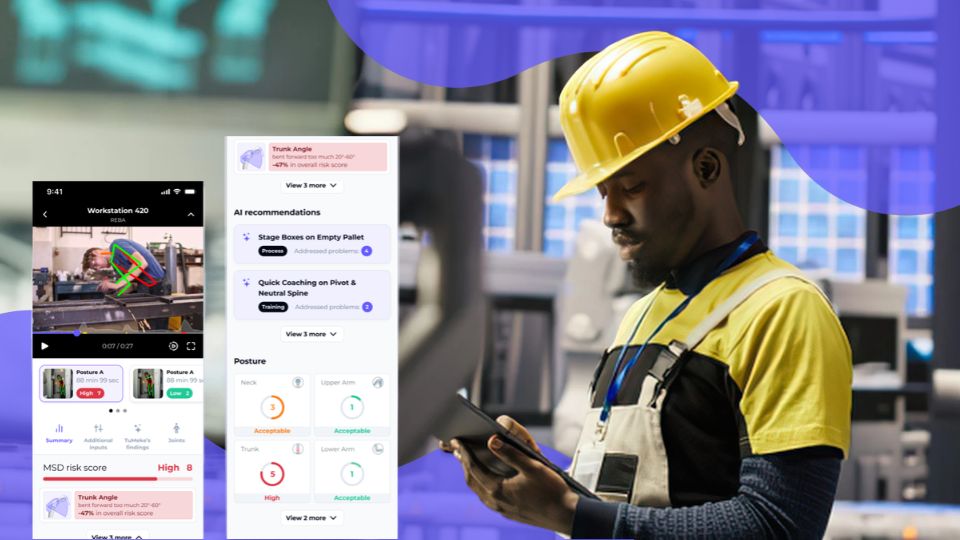
The safety team identifies an ergonomic hazard and recommends a solution. Engineering needs to modify the equipment, but operations can't shut down the line long enough to make the change. Weeks pass, and the corrective action remains open.
Meanwhile, EHS is tracking an unresolved risk without the authority to fix it. Clear ownership means knowing who will carry out the improvement, who can remove the barriers holding it up, and who will verify that the change worked.
Ergonomic improvements often depend on several departments working together, each with its own priorities and constraints. Engineering and maintenance may already be occupied with equipment repairs or other projects. A proposed modification might also require capital approval, purchased parts, or outside contractors.
Production schedules create another obstacle. Even when engineering has a solution ready, operations may have limited opportunities to shut down equipment for installation and testing. Without someone coordinating these dependencies, the improvement can sit unresolved as each department waits on another.
Consider a corrective action that reads "Install adjustable workstation," with EHS listed as the owner. If engineering controls the design and operations controls the installation schedule, the safety manager can follow up but has little authority to complete the assignment.
The action has an owner on paper, but no clear accountability for getting the work done.
There isn't one department that should own every ergonomic corrective action. Responsibility depends on the proposed improvement and who has the authority to implement it.
OSHA's hazard prevention and control guidance recommends assigning responsibility to specific people who have the power or ability to implement the selected controls. NIOSH's ergonomics program guidance also emphasizes management commitment and involvement across departments, including engineering, maintenance, and purchasing.
In practice, responsibilities might be divided as follows:
These departmental roles establish who contributes to an improvement. To clarify who owns it, the team also needs to distinguish between three responsibilities.
These responsibilities can overlap, but they need to be clear. The engineering manager remains accountable for moving the modification forward, even when another department must approve the next step. EHS can monitor progress without becoming responsible for decisions outside its control.
The team also needs a plan for coordinating the work and resolving delays that arise during implementation.
Avoid vague assignments such as "Address lifting hazard" or "Improve workstation ergonomics."
Describe the intended change and identify someone with the authority to lead implementation. For example, instead of assigning EHS to "reduce bending during palletizing," assign an operations or engineering owner to evaluate and implement an appropriate material-positioning solution.
Document the expected outcome, responsible person, and target completion date. The owner should also understand which decisions they can make and which require additional approval.
Before establishing a completion date, identify the work other departments must perform.
Consider a proposed lift table. Engineering must confirm equipment requirements before purchasing can order it. Operations then needs to arrange installation.
Each step needs a responsible person and a realistic timeline. The implementation owner should track these dependencies and follow up before they delay the overall improvement.
Involve supervisors and affected workers early. Their input can reveal scheduling constraints or practical problems that might otherwise emerge after the solution has already been approved.
Some delays require decisions beyond the implementation owner's authority.
If engineering lacks funding, the issue needs a budget decision. If operations cannot accommodate installation, management may need to adjust priorities or establish a production window.
Simply extending the deadline leaves those decisions unresolved. The implementation owner should identify the specific barrier, bring it to someone with the authority to resolve it, and document the agreed next step.
Resolving that barrier may take time, but the original ergonomic exposure still needs attention. OSHA recommends using interim controls while longer-term solutions are developed and implemented.
Assign responsibility for those interim measures and review them as conditions change.
Completing an installation doesn't automatically mean the ergonomic risk has been reduced. Before closing the action, assign someone to confirm that the change was implemented and evaluate whether it addressed the original exposure.
EHS and operations may work together on this verification, using worker feedback, observations during normal production, or a follow-up assessment. For more guidance, see how to measure ergonomic improvements using before-and-after assessments.
When ergonomic improvements involve multiple departments, keeping everyone aligned can be difficult. Safety teams need a way to communicate the risk, maintain accountability as work moves between departments, and confirm that completed changes actually made a difference.
TuMeke Risk Suite helps teams manage that process by connecting ergonomic assessments with corrective actions and their results.
With TuMeke, your team can:
Don't let another ergonomic improvement get lost between departments. Request a TuMeke demo to see how Risk Suite can help your team turn assessment findings into completed, measurable improvements.
Prioritize tasks based on the severity of the risk, how frequently workers are exposed, and how many employees are affected. Address serious hazards promptly rather than prioritizing improvements solely because they're inexpensive or easy to implement.
Each entry should document the identified hazard, proposed improvement, responsible owner, target completion date, and current status. Include outstanding approvals or dependencies, interim controls, and verification results so teams can track the action through closure.
Bring the departments together to evaluate the proposed solution's effectiveness and operational feasibility. Include affected workers in the discussion. If the disagreement involves resources or production priorities, escalate the decision to management rather than leaving the corrective action unresolved.
Review the improvement after installation and during normal operations. NIOSH recommends checking with workers after one week and again after one month. Continue evaluating controls periodically and whenever equipment, tasks, or working conditions change.


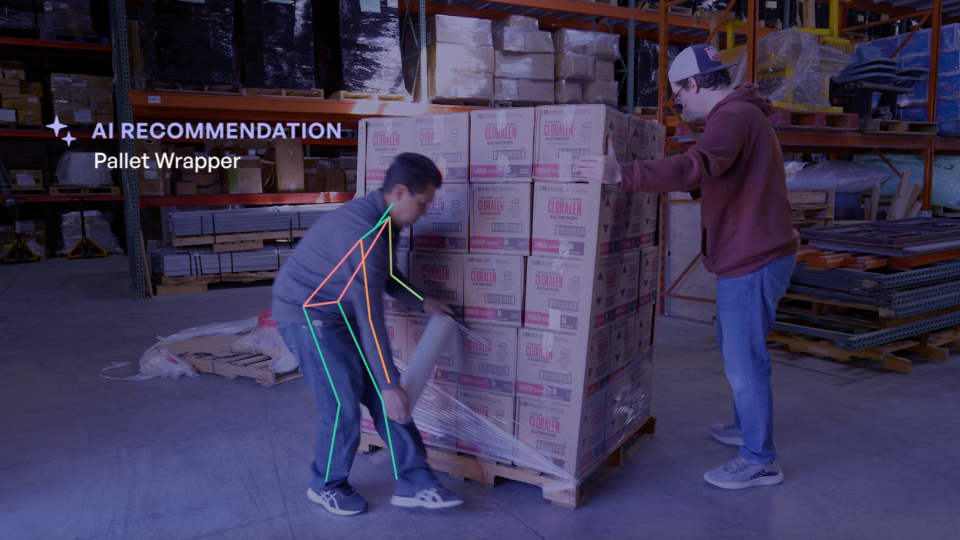




The safety team identifies an ergonomic hazard and recommends a solution. Engineering needs to modify the equipment, but operations can't shut down the line long enough to make the change. Weeks pass, and the corrective action remains open.
Meanwhile, EHS is tracking an unresolved risk without the authority to fix it. Clear ownership means knowing who will carry out the improvement, who can remove the barriers holding it up, and who will verify that the change worked.
Ergonomic improvements often depend on several departments working together, each with its own priorities and constraints. Engineering and maintenance may already be occupied with equipment repairs or other projects. A proposed modification might also require capital approval, purchased parts, or outside contractors.
Production schedules create another obstacle. Even when engineering has a solution ready, operations may have limited opportunities to shut down equipment for installation and testing. Without someone coordinating these dependencies, the improvement can sit unresolved as each department waits on another.
Consider a corrective action that reads "Install adjustable workstation," with EHS listed as the owner. If engineering controls the design and operations controls the installation schedule, the safety manager can follow up but has little authority to complete the assignment.
The action has an owner on paper, but no clear accountability for getting the work done.
There isn't one department that should own every ergonomic corrective action. Responsibility depends on the proposed improvement and who has the authority to implement it.
OSHA's hazard prevention and control guidance recommends assigning responsibility to specific people who have the power or ability to implement the selected controls. NIOSH's ergonomics program guidance also emphasizes management commitment and involvement across departments, including engineering, maintenance, and purchasing.
In practice, responsibilities might be divided as follows:
These departmental roles establish who contributes to an improvement. To clarify who owns it, the team also needs to distinguish between three responsibilities.
These responsibilities can overlap, but they need to be clear. The engineering manager remains accountable for moving the modification forward, even when another department must approve the next step. EHS can monitor progress without becoming responsible for decisions outside its control.
The team also needs a plan for coordinating the work and resolving delays that arise during implementation.
Avoid vague assignments such as "Address lifting hazard" or "Improve workstation ergonomics."
Describe the intended change and identify someone with the authority to lead implementation. For example, instead of assigning EHS to "reduce bending during palletizing," assign an operations or engineering owner to evaluate and implement an appropriate material-positioning solution.
Document the expected outcome, responsible person, and target completion date. The owner should also understand which decisions they can make and which require additional approval.
Before establishing a completion date, identify the work other departments must perform.
Consider a proposed lift table. Engineering must confirm equipment requirements before purchasing can order it. Operations then needs to arrange installation.
Each step needs a responsible person and a realistic timeline. The implementation owner should track these dependencies and follow up before they delay the overall improvement.
Involve supervisors and affected workers early. Their input can reveal scheduling constraints or practical problems that might otherwise emerge after the solution has already been approved.
Some delays require decisions beyond the implementation owner's authority.
If engineering lacks funding, the issue needs a budget decision. If operations cannot accommodate installation, management may need to adjust priorities or establish a production window.
Simply extending the deadline leaves those decisions unresolved. The implementation owner should identify the specific barrier, bring it to someone with the authority to resolve it, and document the agreed next step.
Resolving that barrier may take time, but the original ergonomic exposure still needs attention. OSHA recommends using interim controls while longer-term solutions are developed and implemented.
Assign responsibility for those interim measures and review them as conditions change.
Completing an installation doesn't automatically mean the ergonomic risk has been reduced. Before closing the action, assign someone to confirm that the change was implemented and evaluate whether it addressed the original exposure.
EHS and operations may work together on this verification, using worker feedback, observations during normal production, or a follow-up assessment. For more guidance, see how to measure ergonomic improvements using before-and-after assessments.
When ergonomic improvements involve multiple departments, keeping everyone aligned can be difficult. Safety teams need a way to communicate the risk, maintain accountability as work moves between departments, and confirm that completed changes actually made a difference.
TuMeke Risk Suite helps teams manage that process by connecting ergonomic assessments with corrective actions and their results.
With TuMeke, your team can:
Don't let another ergonomic improvement get lost between departments. Request a TuMeke demo to see how Risk Suite can help your team turn assessment findings into completed, measurable improvements.
Prioritize tasks based on the severity of the risk, how frequently workers are exposed, and how many employees are affected. Address serious hazards promptly rather than prioritizing improvements solely because they're inexpensive or easy to implement.
Each entry should document the identified hazard, proposed improvement, responsible owner, target completion date, and current status. Include outstanding approvals or dependencies, interim controls, and verification results so teams can track the action through closure.
Bring the departments together to evaluate the proposed solution's effectiveness and operational feasibility. Include affected workers in the discussion. If the disagreement involves resources or production priorities, escalate the decision to management rather than leaving the corrective action unresolved.
Review the improvement after installation and during normal operations. NIOSH recommends checking with workers after one week and again after one month. Continue evaluating controls periodically and whenever equipment, tasks, or working conditions change.