


Prueba gratuita de 14 días
Realice evaluaciones ergonómicas ilimitadas durante dos semanas. Todo lo que necesitas es tu teléfono.

.png)
Es fácil subestimar la ergonomía en la manufactura electrónica. Los componentes pequeños, horas sentado y las estaciones ordenadas pueden parecer de bajo riesgo durante un recorrido por la planta, incluso cuando los trabajadores repiten movimientos manuales exigentes durante todo el turno.
Que una pieza sea ligera no significa que la exposición física sea baja. El riesgo suele provenir de la combinación de fuerza de pinza o inserción, repetición, posición de la muñeca, carga estática, ritmo de producción y tiempo de recuperación limitado. Los equipos de seguridad y operaciones deben examinar lo que los trabajadores hacen repetidamente con la pieza, no solo cuánto pesa.
Este artículo identifica los puestos en la industria electrónica que requieren una revisión más detallada. También explica por qué las evaluaciones centradas únicamente en la postura pueden pasar por alto la exposición principal y describe un proceso de evaluación y control más eficaz.
Una pieza pequeña podría exigir una cantidad sorprendente de esfuerzo físico. Es posible que los trabajadores necesiten pinzar, presionar, alinear, estabilizar o insertar componentes miles de veces durante un turno.
El NIOSH identifica la fuerza, la repetición y las posturas forzadas como los principales factores de estrés ergonómico. El nivel de riesgo depende de cuánto esfuerzo exija la tarea, con qué frecuencia se repite y cuánto tiempo dure la exposición. El Consorcio de Trastornos Musculoesqueléticos de las Extremidades Superiores del NIOSH también determinó que la fuerza manual es el factor de riesgo biomecánico más fuerte y consistente en sus investigaciones conjuntas.
La inserción de conectores es un buen ejemplo. En un estudio anterior del NIOSH sobre cableado de electrodomésticos, los trabajadores, en ocasiones, conectaban hasta cinco cables durante un ciclo de 20 segundos. Insertar las terminales requería un promedio de 12 a 32 libras de fuerza, dependiendo del calibre del cable.
El trabajo estático genera un tipo de exposición diferente. Un técnico de soldadura podría estar sosteniendo una herramienta ligera con poco movimiento visible, pero aun así mantener un agarre de precisión, antebrazos sin apoyo y una posición fija del cuello mientras trabaja bajo aumento.
No hay un trabajo particular en la electrónica que represente siempre el mayor riesgo. La prioridad depende de la combinación de exposición, las condiciones de producción y el tiempo dedicado a la tarea.
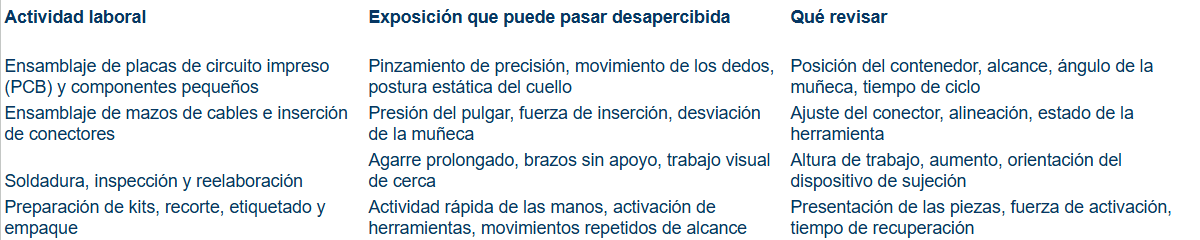
El retrabajo merece una atención especial. Mientras que una estación de producción podría ofrecer una orientación predecible y accesorios estables, un técnico de retrabajo se enfrenta a un acceso restringido, una duración de tarea variable y ángulos de herramienta menos favorables.
Los métodos posturales pueden identificar muñecas dobladas, hombros elevados, flexión del cuello y otras preocupaciones importantes. Sin embargo, es posible que no respondan completamente a qué tan fuerte, qué tan seguido o por cuánto tiempo las manos ejercen fuerza.
Un trabajador podría parecer estar erguido con los codos cerca del cuerpo mientras presiona repetidamente un conector con el pulgar. Otro podría mantener una postura de hombros aceptable, pero sostener un agarre de precisión durante la mayor parte del ciclo. Una breve evaluación de la postura no mostrará la actividad total de las manos ni el patrón de recuperación.
El método de evaluación debe coincidir con la pregunta física. El método RULA puede ayudar a evaluar la postura de las extremidades superiores, mientras que el Índice de Esfuerzo Revisado se enfoca en el trabajo intensivo de manos que involucra factores como la intensidad del esfuerzo, repetición, duración y posición de la muñeca.
La evaluación postural sigue siendo valiosa. Sin embargo, la postura por sí sola podría no mostrar la exposición completa cuando la demanda principal recae en las manos, muñecas o antebrazos.
Una grabación única de un ensamblador experimentado completando un ciclo normal puede producir una evaluación impecable, pero es una conclusión débil. La evaluación debería mostrar cómo se realiza el trabajo realmente bajo condiciones normales de producción.
Para trabajos de electrónica, pregunte:
Observe a más de un trabajador cuando sea posible. Un operador experimentado podría utilizar una técnica de menor esfuerzo que un empleado nuevo, más bajo, más alto o zurdo no pueda replicar.
Los controles más eficaces modifican las condiciones de trabajo que generan la exposición. La guía de ergonomía de la OSHA identifica los controles de ingeniería como el enfoque preferido siempre que sea viable.
Dependiendo de la tarea, algunos cambios útiles podrían ser:
La rotación de puestos requiere el mismo nivel de escrutinio. Mover a alguien de la inserción de conectores al corte de cables podría cambiar el nombre del puesto, pero mantendría el pinzamiento rápido, la desviación de la muñeca y la carga estática de la parte superior del cuerpo. Haga una comparativa del perfil de exposición de cada puesto antes de considerar la rotación como una recuperación.
Los controles también podrían desplazar el problema. Elevar un dispositivo podría reducir la flexión del cuello, pero aumentar la elevación de los hombros. Reevalúe la tarea modificada para confirmar que el cambio redujo la exposición prevista sin crear una nueva.
Evaluar una estación es manejable. Comparar el ensamblaje repetitivo, cableado, soldaduras, inspección y retrabajo en varias líneas o instalaciones genera un problema mayor de consistencia y documentación.
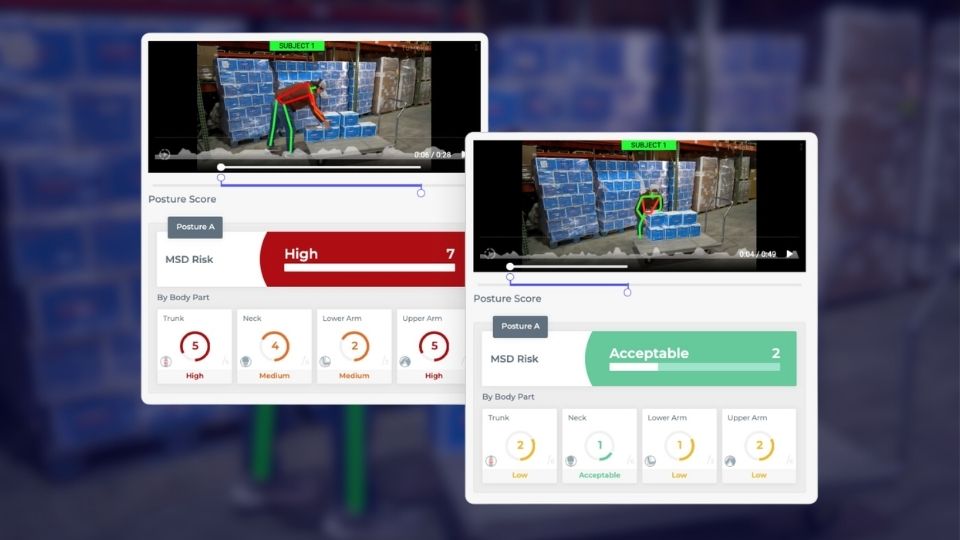
La Suite de Riesgos de TuMeke utiliza evaluaciones ergonómicas basadas en video y analiza factores que incluyen postura, repetición, duración, contexto del trabajo, agarre, fuerza y equilibrio. Para los equipos de manufactura de productos electrónicos, esto respalda varios usos:
Programe una demostración de TuMeke hoy mismo para conocer cómo su equipo podría evaluar el ensamblaje repetitivo, cableado, soldaduras, inspecciones y otros trabajos de manufactura intensivos en el uso de las manos.
Sí. La inserción de conectores, el uso de clips, el engarzado, la activación de herramientas y la alineación de precisión pueden requerir una fuerza considerable del pulgar, los dedos o el agarre, incluso cuando el componente pesa muy poco. Evalúe el esfuerzo necesario para manipular la pieza y la frecuencia con la que el trabajador repite dicho esfuerzo.
El método RULA puede ayudar a identificar problemas posturales en las extremidades superiores, pero es posible que no describa completamente una tarea que requiere un uso intensivo de las manos. Cuando la fuerza, la repetición, la duración del esfuerzo y la posición de la muñeca determinan la exposición, los equipos también pueden necesitar el Índice de Esfuerzo Manual Revisado (Revised Hand Strain Index) u otro método diseñado para el trabajo manual repetitivo.
Sí. Todas las pruebas gratuitas y suscripciones de TuMeke incluyen acceso a nuestra evaluación del Índice de Esfuerzo Manual Revisado (RHSI, por sus siglas en inglés) para medir la fuerza, repetición, duración y postura en trabajos que requieren un uso intensivo de las manos (incluyendo agarre, torsión, sujeción, trabajo con herramientas manuales y más).
No existe un tiempo de grabación determinado. La muestra debe capturar un ciclo representativo más las variaciones recurrentes, como conectores difíciles, reabastecimiento, inspección, retrabajo o cambios de producto. Un clip corto que excluya esas condiciones podría subestimar la exposición.
A nivel federal, la OSHA no cuenta con una norma de ergonomía específica para la manufactura de productos electrónicos. Sin embargo, la OSHA puede abordar riesgos ergonómicos graves reconocidos bajo la Cláusula de Obligación General (General Duty Clause). Los empleadores también deben verificar los requisitos estatales aplicables y otras normas relacionadas con el trabajo.
La rotación de puestos puede ayudar cuando la tarea alternativa cambia los grupos musculares dominantes, el agarre, fuerza, repetición, postura y exigencias visuales. Rotar a los trabajadores entre varias tareas de alta frecuencia que impliquen pinzamiento o activación de herramientas podría ofrecer poca recuperación, incluso cuando los puestos tengan nombres diferentes.
%201.svg)


.jpg)

.jpg)

Es fácil subestimar la ergonomía en la manufactura electrónica. Los componentes pequeños, horas sentado y las estaciones ordenadas pueden parecer de bajo riesgo durante un recorrido por la planta, incluso cuando los trabajadores repiten movimientos manuales exigentes durante todo el turno.
Que una pieza sea ligera no significa que la exposición física sea baja. El riesgo suele provenir de la combinación de fuerza de pinza o inserción, repetición, posición de la muñeca, carga estática, ritmo de producción y tiempo de recuperación limitado. Los equipos de seguridad y operaciones deben examinar lo que los trabajadores hacen repetidamente con la pieza, no solo cuánto pesa.
Este artículo identifica los puestos en la industria electrónica que requieren una revisión más detallada. También explica por qué las evaluaciones centradas únicamente en la postura pueden pasar por alto la exposición principal y describe un proceso de evaluación y control más eficaz.
Una pieza pequeña podría exigir una cantidad sorprendente de esfuerzo físico. Es posible que los trabajadores necesiten pinzar, presionar, alinear, estabilizar o insertar componentes miles de veces durante un turno.
El NIOSH identifica la fuerza, la repetición y las posturas forzadas como los principales factores de estrés ergonómico. El nivel de riesgo depende de cuánto esfuerzo exija la tarea, con qué frecuencia se repite y cuánto tiempo dure la exposición. El Consorcio de Trastornos Musculoesqueléticos de las Extremidades Superiores del NIOSH también determinó que la fuerza manual es el factor de riesgo biomecánico más fuerte y consistente en sus investigaciones conjuntas.
La inserción de conectores es un buen ejemplo. En un estudio anterior del NIOSH sobre cableado de electrodomésticos, los trabajadores, en ocasiones, conectaban hasta cinco cables durante un ciclo de 20 segundos. Insertar las terminales requería un promedio de 12 a 32 libras de fuerza, dependiendo del calibre del cable.
El trabajo estático genera un tipo de exposición diferente. Un técnico de soldadura podría estar sosteniendo una herramienta ligera con poco movimiento visible, pero aun así mantener un agarre de precisión, antebrazos sin apoyo y una posición fija del cuello mientras trabaja bajo aumento.
No hay un trabajo particular en la electrónica que represente siempre el mayor riesgo. La prioridad depende de la combinación de exposición, las condiciones de producción y el tiempo dedicado a la tarea.
El retrabajo merece una atención especial. Mientras que una estación de producción podría ofrecer una orientación predecible y accesorios estables, un técnico de retrabajo se enfrenta a un acceso restringido, una duración de tarea variable y ángulos de herramienta menos favorables.
Los métodos posturales pueden identificar muñecas dobladas, hombros elevados, flexión del cuello y otras preocupaciones importantes. Sin embargo, es posible que no respondan completamente a qué tan fuerte, qué tan seguido o por cuánto tiempo las manos ejercen fuerza.
Un trabajador podría parecer estar erguido con los codos cerca del cuerpo mientras presiona repetidamente un conector con el pulgar. Otro podría mantener una postura de hombros aceptable, pero sostener un agarre de precisión durante la mayor parte del ciclo. Una breve evaluación de la postura no mostrará la actividad total de las manos ni el patrón de recuperación.
El método de evaluación debe coincidir con la pregunta física. El método RULA puede ayudar a evaluar la postura de las extremidades superiores, mientras que el Índice de Esfuerzo Revisado se enfoca en el trabajo intensivo de manos que involucra factores como la intensidad del esfuerzo, repetición, duración y posición de la muñeca.
La evaluación postural sigue siendo valiosa. Sin embargo, la postura por sí sola podría no mostrar la exposición completa cuando la demanda principal recae en las manos, muñecas o antebrazos.
Una grabación única de un ensamblador experimentado completando un ciclo normal puede producir una evaluación impecable, pero es una conclusión débil. La evaluación debería mostrar cómo se realiza el trabajo realmente bajo condiciones normales de producción.
Para trabajos de electrónica, pregunte:
Observe a más de un trabajador cuando sea posible. Un operador experimentado podría utilizar una técnica de menor esfuerzo que un empleado nuevo, más bajo, más alto o zurdo no pueda replicar.
Los controles más eficaces modifican las condiciones de trabajo que generan la exposición. La guía de ergonomía de la OSHA identifica los controles de ingeniería como el enfoque preferido siempre que sea viable.
Dependiendo de la tarea, algunos cambios útiles podrían ser:
La rotación de puestos requiere el mismo nivel de escrutinio. Mover a alguien de la inserción de conectores al corte de cables podría cambiar el nombre del puesto, pero mantendría el pinzamiento rápido, la desviación de la muñeca y la carga estática de la parte superior del cuerpo. Haga una comparativa del perfil de exposición de cada puesto antes de considerar la rotación como una recuperación.
Los controles también podrían desplazar el problema. Elevar un dispositivo podría reducir la flexión del cuello, pero aumentar la elevación de los hombros. Reevalúe la tarea modificada para confirmar que el cambio redujo la exposición prevista sin crear una nueva.
Evaluar una estación es manejable. Comparar el ensamblaje repetitivo, cableado, soldaduras, inspección y retrabajo en varias líneas o instalaciones genera un problema mayor de consistencia y documentación.
La Suite de Riesgos de TuMeke utiliza evaluaciones ergonómicas basadas en video y analiza factores que incluyen postura, repetición, duración, contexto del trabajo, agarre, fuerza y equilibrio. Para los equipos de manufactura de productos electrónicos, esto respalda varios usos:
Programe una demostración de TuMeke hoy mismo para conocer cómo su equipo podría evaluar el ensamblaje repetitivo, cableado, soldaduras, inspecciones y otros trabajos de manufactura intensivos en el uso de las manos.
Sí. La inserción de conectores, el uso de clips, el engarzado, la activación de herramientas y la alineación de precisión pueden requerir una fuerza considerable del pulgar, los dedos o el agarre, incluso cuando el componente pesa muy poco. Evalúe el esfuerzo necesario para manipular la pieza y la frecuencia con la que el trabajador repite dicho esfuerzo.
El método RULA puede ayudar a identificar problemas posturales en las extremidades superiores, pero es posible que no describa completamente una tarea que requiere un uso intensivo de las manos. Cuando la fuerza, la repetición, la duración del esfuerzo y la posición de la muñeca determinan la exposición, los equipos también pueden necesitar el Índice de Esfuerzo Manual Revisado (Revised Hand Strain Index) u otro método diseñado para el trabajo manual repetitivo.
Sí. Todas las pruebas gratuitas y suscripciones de TuMeke incluyen acceso a nuestra evaluación del Índice de Esfuerzo Manual Revisado (RHSI, por sus siglas en inglés) para medir la fuerza, repetición, duración y postura en trabajos que requieren un uso intensivo de las manos (incluyendo agarre, torsión, sujeción, trabajo con herramientas manuales y más).
No existe un tiempo de grabación determinado. La muestra debe capturar un ciclo representativo más las variaciones recurrentes, como conectores difíciles, reabastecimiento, inspección, retrabajo o cambios de producto. Un clip corto que excluya esas condiciones podría subestimar la exposición.
A nivel federal, la OSHA no cuenta con una norma de ergonomía específica para la manufactura de productos electrónicos. Sin embargo, la OSHA puede abordar riesgos ergonómicos graves reconocidos bajo la Cláusula de Obligación General (General Duty Clause). Los empleadores también deben verificar los requisitos estatales aplicables y otras normas relacionadas con el trabajo.
La rotación de puestos puede ayudar cuando la tarea alternativa cambia los grupos musculares dominantes, el agarre, fuerza, repetición, postura y exigencias visuales. Rotar a los trabajadores entre varias tareas de alta frecuencia que impliquen pinzamiento o activación de herramientas podría ofrecer poca recuperación, incluso cuando los puestos tengan nombres diferentes.