


Free 14-Day Trial
Perform unlimited ergonomic assessments for two weeks. All you need is your phone.

Key Takeaway
In loud production environments, verbal ergonomic coaching has limits. Supervisors may see a risky reach, twist, lift, or repetition pattern, but they may not be able to explain it clearly over equipment, PPE, and line pressure. Raised voices can also make coaching feel like scolding.
Visual ergonomic risk data gives teams a clearer way to focus on the movement, the exposure, and the work conditions behind the risk. For meat processors, that can make ergonomic conversations more practical, respectful, and actionable.
In many plants, coaching does not fail because supervisors do not care.
It fails because the environment works against the conversation.
A supervisor may notice a worker reaching too far across a conveyor, twisting during a transfer, or repeating the same knife motion throughout the shift. But that supervisor may also be standing near running equipment, moving product, chilled air systems, floor traffic, and workers wearing hearing protection.
At that point, a quick verbal correction may not be enough.
OSHA gives a simple signal for noisy workplaces: if you need to raise your voice to speak to someone 3 feet away, noise levels might be over 85 dBA.
That matters for more than hearing conservation.
NIOSH notes that high noise can reduce workers’ awareness of what is happening around them, including signals, alarms, and verbal warnings.
In other words, the same environment that makes hearing protection necessary can also make verbal ergonomic coaching harder to deliver.
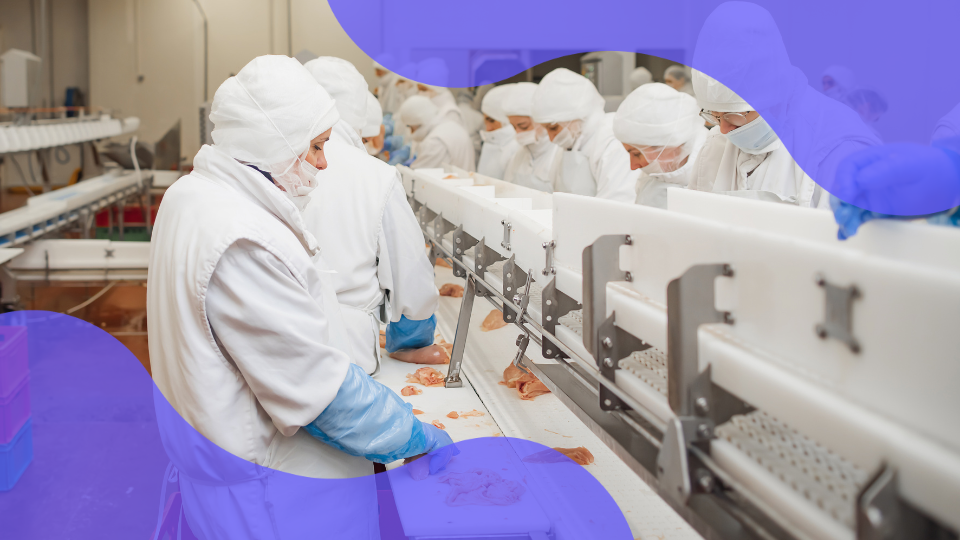
Meat and poultry processing plants create the exact conditions where ergonomic risk can be hard to explain in the moment.
The work is fast. Tasks are often repetitive. Workers may use knives, trim product, hang product, transfer product, pack boxes, load machines, clear jams, or work at fixed stations for long periods.
The risk may come from one movement, but more often it comes from the combination of several factors:
These risks are not theoretical.
A NIOSH Health Hazard Evaluation at a poultry processing plant assessed repetition and force across 67 job tasks and found that:
NIOSH recommended redesigning job tasks so hand activity and force remained below the applicable threshold, using job rotation while redesign was pending, following knife change-out schedules, adding breaks, and improving early reporting, screening, and medical assessment.
Those recommendations point to an important lesson for safety teams: ergonomic risk reduction usually requires more than a reminder. Teams need to understand the task well enough to change the exposure.
A verbal correction usually focuses on what the supervisor sees in that moment.
“Don’t twist like that.”
“Keep the box closer.”
“Try not to reach so far.”
Those comments may be accurate. But they often do not capture the full task.
A worker may twist because the product drop point sits behind them. They may reach because the workstation layout forces the movement. They may grip harder because gloves, moisture, cold temperatures, or tool condition make the work harder. They may move too fast because the line pace leaves no recovery time.
In those cases, coaching the worker may not address the exposure.
The better question is:
What does the task require the worker to do, over and over, across the shift?
That is where visual ergonomic data becomes useful. It lets teams move the conversation from opinion to observation.
Instead of saying, “This job looks rough,” the team can show the reach. Instead of debating whether the posture is extreme, they can review the video. Instead of relying on one person’s memory, they can look at the same movement pattern together.
Noise does not just make coaching harder to hear.
It can also change how coaching feels.
On a loud production floor, a supervisor may need to raise their voice just to explain a simple correction. But from the worker’s side, that raised voice can feel like being scolded, especially when the conversation happens in front of others or during a stressful part of the shift.
That matters because ergonomic coaching works best when workers feel involved, not blamed.
If the message sounds like, “You are doing this wrong,” workers may become defensive or tune it out. But when the team can look at the task together, the conversation changes.
The focus moves from the person to the work.
Instead of yelling across the line, a supervisor can show the movement during a huddle, training session, or follow-up conversation. The team can point to the reach, twist, grip, or repetition pattern and ask a better question:
“What is this task making the worker do?”
That small shift can improve the tone of ergonomic conversations. It makes the discussion less personal and more practical.
In loud, fast-moving production environments, safety teams need more than a quick observation or a shouted correction on the floor.
They need a way to capture the task, show the movement clearly, and help supervisors, workers, and operations leaders understand what is driving the risk.
TuMeke helps meat processors turn video of real work into visual ergonomic risk data. Instead of relying on memory, manual notes, or one person’s interpretation, teams can review the same task together and focus the conversation on the movement, exposure, and work conditions behind the risk.
With TuMeke, safety teams can:
Ready to make ergonomic risk easier to see, explain, and reduce? Book a demo with TuMeke and see how video-based movement analysis can help your team turn real work into practical safety improvements.
Why is ergonomic coaching difficult in meat processing plants?
Ergonomic coaching is difficult because meat processing plants are loud, fast, and physically demanding. Supervisors may need to communicate around conveyors, grinders, saws, fans, PPE, hearing protection, and production pressure.
How does noise affect safety communication?
Noise can make verbal instructions, warnings, and coaching harder to hear or understand. NIOSH notes that high noise can reduce awareness of signals, alarms, and verbal warnings.
What ergonomic risks are common in meat and poultry processing?
Common ergonomic risks include repetition, forceful exertion, awkward posture, extended reaching, twisting, gripping, and long exposure duration. These risks often combine within the same task.
Why is video useful for ergonomic assessments?
Video gives safety teams a shared visual record of the task. Teams can review the same movement, point to specific risk factors, compare before-and-after changes, and reduce reliance on memory or subjective observation.
Does visual ergonomic data replace training?
No. Visual ergonomic data supports training, coaching, and corrective action, but it does not replace clear instruction, worker input, language access, or engineering controls.
%201.svg)


.jpg)

.jpg)
.jpg)

Key Takeaway
In loud production environments, verbal ergonomic coaching has limits. Supervisors may see a risky reach, twist, lift, or repetition pattern, but they may not be able to explain it clearly over equipment, PPE, and line pressure. Raised voices can also make coaching feel like scolding.
Visual ergonomic risk data gives teams a clearer way to focus on the movement, the exposure, and the work conditions behind the risk. For meat processors, that can make ergonomic conversations more practical, respectful, and actionable.
In many plants, coaching does not fail because supervisors do not care.
It fails because the environment works against the conversation.
A supervisor may notice a worker reaching too far across a conveyor, twisting during a transfer, or repeating the same knife motion throughout the shift. But that supervisor may also be standing near running equipment, moving product, chilled air systems, floor traffic, and workers wearing hearing protection.
At that point, a quick verbal correction may not be enough.
OSHA gives a simple signal for noisy workplaces: if you need to raise your voice to speak to someone 3 feet away, noise levels might be over 85 dBA.
That matters for more than hearing conservation.
NIOSH notes that high noise can reduce workers’ awareness of what is happening around them, including signals, alarms, and verbal warnings.
In other words, the same environment that makes hearing protection necessary can also make verbal ergonomic coaching harder to deliver.
Meat and poultry processing plants create the exact conditions where ergonomic risk can be hard to explain in the moment.
The work is fast. Tasks are often repetitive. Workers may use knives, trim product, hang product, transfer product, pack boxes, load machines, clear jams, or work at fixed stations for long periods.
The risk may come from one movement, but more often it comes from the combination of several factors:
These risks are not theoretical.
A NIOSH Health Hazard Evaluation at a poultry processing plant assessed repetition and force across 67 job tasks and found that:
NIOSH recommended redesigning job tasks so hand activity and force remained below the applicable threshold, using job rotation while redesign was pending, following knife change-out schedules, adding breaks, and improving early reporting, screening, and medical assessment.
Those recommendations point to an important lesson for safety teams: ergonomic risk reduction usually requires more than a reminder. Teams need to understand the task well enough to change the exposure.
A verbal correction usually focuses on what the supervisor sees in that moment.
“Don’t twist like that.”
“Keep the box closer.”
“Try not to reach so far.”
Those comments may be accurate. But they often do not capture the full task.
A worker may twist because the product drop point sits behind them. They may reach because the workstation layout forces the movement. They may grip harder because gloves, moisture, cold temperatures, or tool condition make the work harder. They may move too fast because the line pace leaves no recovery time.
In those cases, coaching the worker may not address the exposure.
The better question is:
What does the task require the worker to do, over and over, across the shift?
That is where visual ergonomic data becomes useful. It lets teams move the conversation from opinion to observation.
Instead of saying, “This job looks rough,” the team can show the reach. Instead of debating whether the posture is extreme, they can review the video. Instead of relying on one person’s memory, they can look at the same movement pattern together.
Noise does not just make coaching harder to hear.
It can also change how coaching feels.
On a loud production floor, a supervisor may need to raise their voice just to explain a simple correction. But from the worker’s side, that raised voice can feel like being scolded, especially when the conversation happens in front of others or during a stressful part of the shift.
That matters because ergonomic coaching works best when workers feel involved, not blamed.
If the message sounds like, “You are doing this wrong,” workers may become defensive or tune it out. But when the team can look at the task together, the conversation changes.
The focus moves from the person to the work.
Instead of yelling across the line, a supervisor can show the movement during a huddle, training session, or follow-up conversation. The team can point to the reach, twist, grip, or repetition pattern and ask a better question:
“What is this task making the worker do?”
That small shift can improve the tone of ergonomic conversations. It makes the discussion less personal and more practical.
In loud, fast-moving production environments, safety teams need more than a quick observation or a shouted correction on the floor.
They need a way to capture the task, show the movement clearly, and help supervisors, workers, and operations leaders understand what is driving the risk.
TuMeke helps meat processors turn video of real work into visual ergonomic risk data. Instead of relying on memory, manual notes, or one person’s interpretation, teams can review the same task together and focus the conversation on the movement, exposure, and work conditions behind the risk.
With TuMeke, safety teams can:
Ready to make ergonomic risk easier to see, explain, and reduce? Book a demo with TuMeke and see how video-based movement analysis can help your team turn real work into practical safety improvements.
Why is ergonomic coaching difficult in meat processing plants?
Ergonomic coaching is difficult because meat processing plants are loud, fast, and physically demanding. Supervisors may need to communicate around conveyors, grinders, saws, fans, PPE, hearing protection, and production pressure.
How does noise affect safety communication?
Noise can make verbal instructions, warnings, and coaching harder to hear or understand. NIOSH notes that high noise can reduce awareness of signals, alarms, and verbal warnings.
What ergonomic risks are common in meat and poultry processing?
Common ergonomic risks include repetition, forceful exertion, awkward posture, extended reaching, twisting, gripping, and long exposure duration. These risks often combine within the same task.
Why is video useful for ergonomic assessments?
Video gives safety teams a shared visual record of the task. Teams can review the same movement, point to specific risk factors, compare before-and-after changes, and reduce reliance on memory or subjective observation.
Does visual ergonomic data replace training?
No. Visual ergonomic data supports training, coaching, and corrective action, but it does not replace clear instruction, worker input, language access, or engineering controls.